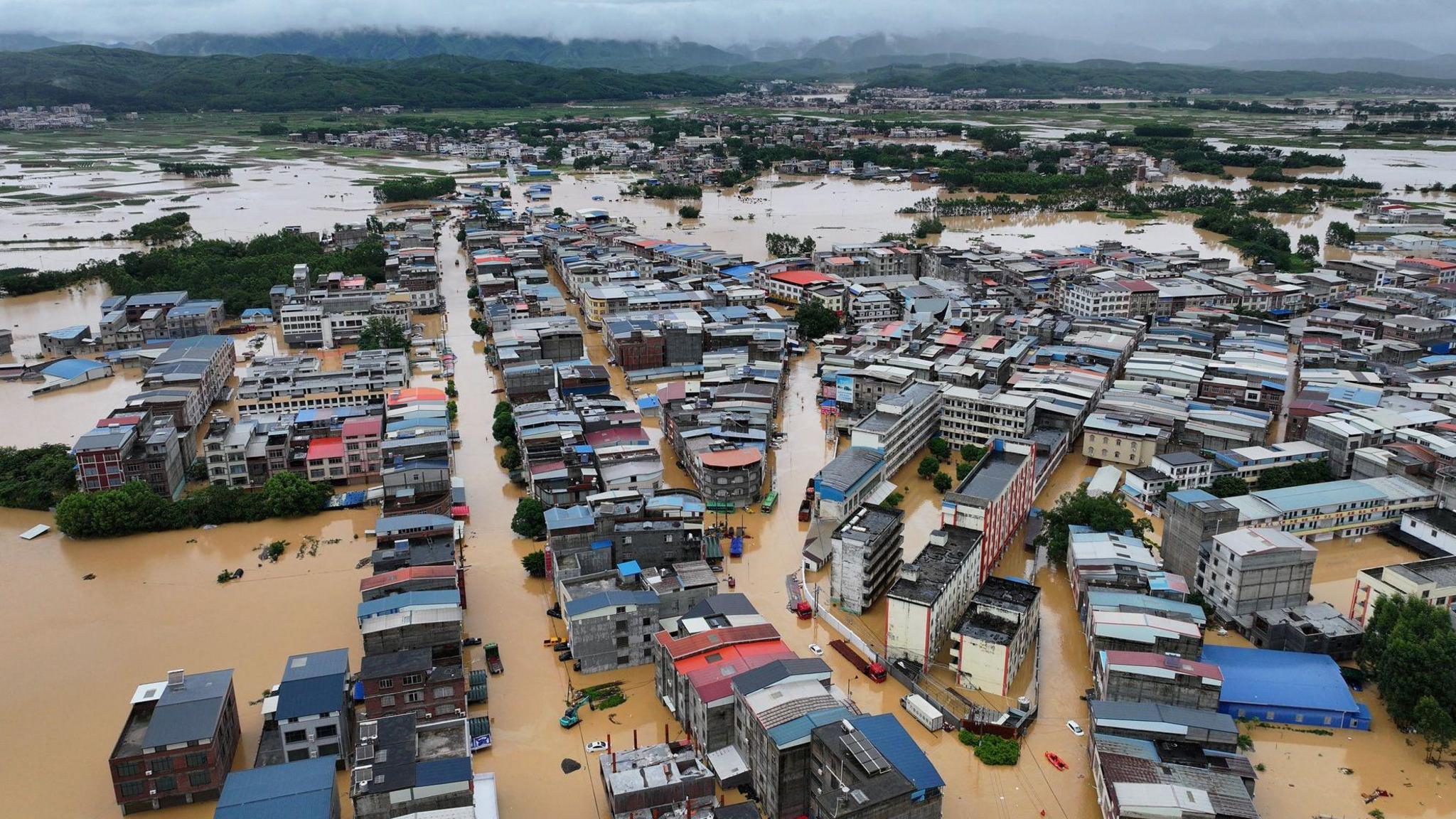
On Sunday heavy rain began falling on Renhe village in southern China’s Guangxi province. The villagers, used to such storms, were surprised when the water rose rapidly over the next few hours.
By early Monday the waters had reached knee‑height, and by dawn the first floor of homes was completely underwater. The sudden rise left no time for people to gather food before they fled.
Local residents say the floods happened in seconds, plunging families into unknown danger. Thousands were displaced across Guangxi, and at least four people have died. The city of Nanning and surrounding villages are calling for rescue from rooftops.
Maysak also struck central Hubei, triggering thunderstorms and, for the first time in years, tornadoes that damaged buildings in Ezhou and Huanggang. The rare phenomenon created dangerous winds, tossed outdoor furniture, and even sent a man upwards from his apartment.
State media reports that 17 people have died, hundreds injured and tens thousands evacuated. President Xi has ordered an all‑out rescue and relief operation, urging treatment for the injured and efficient disaster prevention.
The typhoon, the first to hit China in 2026, was noted for its sudden onset and violent winds. It highlighted how extreme weather is becoming increasingly threatening for China’s large agricultural sector.
Additional storms, including Super Typhoon Bavi on the east coast, promise to bring more heavy rain, complicating rescue efforts.
Reports of snakes swimming in the flooded waters, including farm‑raised venomous species, add another danger to already overwhelmed communities.
In other parts of China, flash floods in Inner Mongolia and record rainfall in Inner China added to the list of extreme events, leaving farmers and residents battling water damage and loss of life.