In brief
Shankar, a 29-year-old African elephant at Delhi Zoo, succumbed to encephalomyocarditis virus (EMCV), a rodent-borne virus that can cause severe heart inflammation and brain fever. His death on September 17 has been officially attributed to this virus following an autopsy. Shankar lived a solitary life after losing his companion in 2001, prompting calls for his relocation to a sanctuary. The case is noteworthy as it represents the first recorded death due to EMCV in India.
A rodent-borne virus led to the death of the only African elephant at the zoo in Indian capital Delhi, officials have told the BBC.
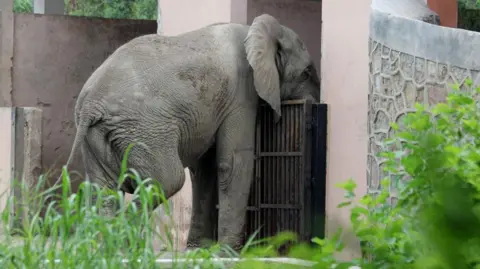
Shankar, a 29-year-old male elephant, died on 17 September after spending much of his life in isolation. The cause of his death wasn't known at the time.
Now, an autopsy has revealed that the elephant tested positive for encephalomyocarditis virus (EMCV), Delhi Zoo director Sanjeet Kumar said.
EMCV is known to cause fatal inflammation of the heart and sometimes brain fever in mammals. The virus is spread through rodent faeces and urine.
Most outbreaks of EMCV have been associated with captive animals in pig farms, primate research centres and zoos, according to the MSD veterinary manual.
The virus replicates rapidly and can attack the heart and sometimes the brain, often causing sudden death. There is no specific antiviral cure available for EMCV so far.
According to a 2012 study in the peer-reviewed medical journal Virulence, EMCV has been documented in pigs, rodents, big cats and African elephants, among other mammals.
The virus, according to a report in Nature, was first isolated in 1945 from a gibbon in Florida. Since the 1970s, local outbreaks have been reported in the US, South Africa, China, Australia, Canada, South America and several countries in Europe.
The outbreaks in the US and South Africa particularly affected captive African elephants.
In India, the virus was first isolated in the late 1960s. But Shankar's is the first recorded death caused by EMCV in India, a senior official at the Indian Veterinary Research Institute (IVRI) told the BBC, adding that there may have been unreported instances of mammals dying because of EMCV. Shankar's autopsy was conducted at IVRI.
Mr Kumar, the zoo director, did not answer specific questions about how Shankar may have got the infection and whether there was a rodent problem at the zoo.
It is a rare virus and I am not an expert on it, he said.
Shankar's death had triggered sadness among animal lovers and activists who had long sought to rehabilitate the lonely animal.
He was among two African elephants that arrived in India in 1998 as a diplomatic gift from Zimbabwe to former Indian President Shankar Dayal Sharma. But Shankar's companion died in 2001. He was then temporarily lodged with Asian elephants in the zoo, but the plan did not work.
In 2012, Shankar was shifted to a new enclosure that left him virtually in solitary confinement - despite a 2009 federal ban on keeping elephants alone for more than six months. He remained there until his death.
For years, activists had demanded that Shankar be removed from the zoo and rehabilitated in a wildlife sanctuary that houses other African elephants.
In 2021, a petition in Delhi's high court sought Shankar's relocation to a sanctuary with other African elephants. Two years later, the court dismissed the petition, directing the petitioner to approach a committee handling transfers of wild animals by zoos.
After Shankar's death, there is only one African elephant left in India - an adult male at the Mysore Zoo in southern Karnataka state. He has also been living alone for years.