
In brief
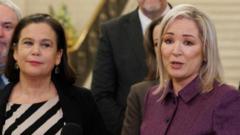
In a significant political gesture, Sinn Féin's president, Mary Lou McDonald, alongside first minister Michelle O'Neill, will not attend the upcoming St. Patrick's Day celebrations at the White House, in protest against President Donald Trump's comments regarding the Israel-Gaza conflict.
The party's decision stems from growing outrage within the Irish community regarding Trump's recent remarks, which suggested a mass displacement of Palestinians from Gaza. McDonald stated that she followed the president's statements with "growing concern," emphasizing the need for a permanent ceasefire and a return to negotiations aimed at establishing a sustainable two-state solution.Notably, O'Neill noted that Trump's proposals for Gaza amounted to "forced expulsion," reinforcing the party's non-participation as a principled stand against such measures. She expressed a commitment to continuing dialogues with influential figures in the U.S. to promote peace and economic progress in the region.This boycott comes at the heels of increasing political pressure, as the Social Democratic and Labour Party (SDLP) has also indicated it will decline invitations under these circumstances. Traditionally, politicians from both Northern Ireland and the Republic of Ireland partake in St. Patrick's Day events in the U.S., which often involve the Taoiseach presenting shamrocks to the American president.Mary Lou McDonald reiterated that the current U.S. administration is "catastrophically wrong" regarding Palestine, and urged Taoiseach Micheál Martin to ensure that Irish perspectives on the conflict are represented during the celebrations. The St. Patrick's Day events serve as significant diplomatic engagements fostering Irish-American relations, with the potential for escalated discontent among Irish politicians should the current American stance on Palestine continue unchallenged.This marks the second consecutive year that Sinn Féin has opted out of White House festivities, following mounting calls for solidarity with the Palestinian plight. The backdrop to this decision reveals broader political and ethical tensions surrounding U.S. foreign policy and its implications for Ireland’s peace processes, exposing a critical juncture in contemporary Irish political life.With the SDLP and Sinn Féin both declining participation in the key Washington events, the political landscape around St. Patrick's Day may shift, reflecting a new era of activism and responsiveness to international issues facing Ireland and its diaspora.

