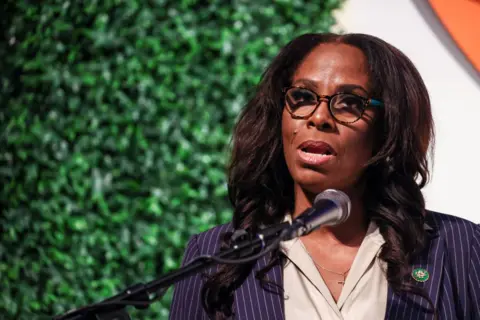
In 2019, during a significant event in Washington, all eyes were on Michael Cohen as he testified about Donald Trump. A notable exchange transpired between Cohen and Representative Stacey Plaskett, who was seen texting.
Recently revealed emails indicate that the recipient of those texts was none other than convicted sex offender, Jeffrey Epstein. This revelation highlights the pervasive influence Epstein wielded over America’s elite.
Plaskett has since claimed she was not seeking advice from Epstein, emphasizing that she engaged many contacts for political insight. However, the incident raises questions about how Epstein stayed connected with powerful figures despite his notorious background.
Over 20,000 pages of documents exposed Epstein's extensive network, revealing communications with scholars, politicians, and business magnates. Many continued their relationships with Epstein post-conviction, suggesting a perplexing disregard for his actions, perhaps influenced by his financial prowess and social standing.
Notably, figures like Larry Summers interacted with Epstein for advice on personal matters, leading to public scrutiny after the release of these documents. Epstein’s unique charisma allowed him to thrive in prestigious circles despite being labeled a ‘diabolical monster’ by some who acknowledged his darker side.
The complex interplay of wealth, influence, and moral bankruptcy is starkly illustrated by the continued associations people maintained with Epstein, raising ethical questions about accountability among the elite.