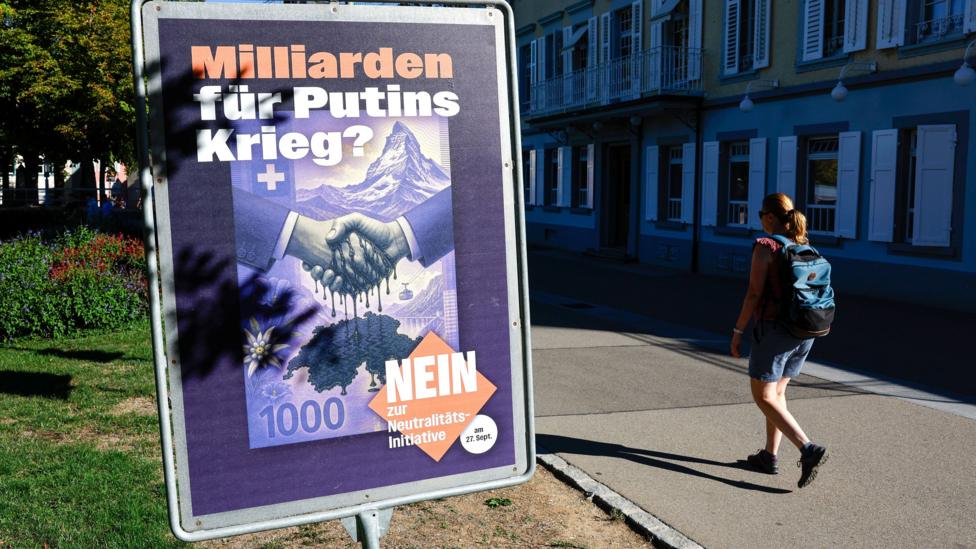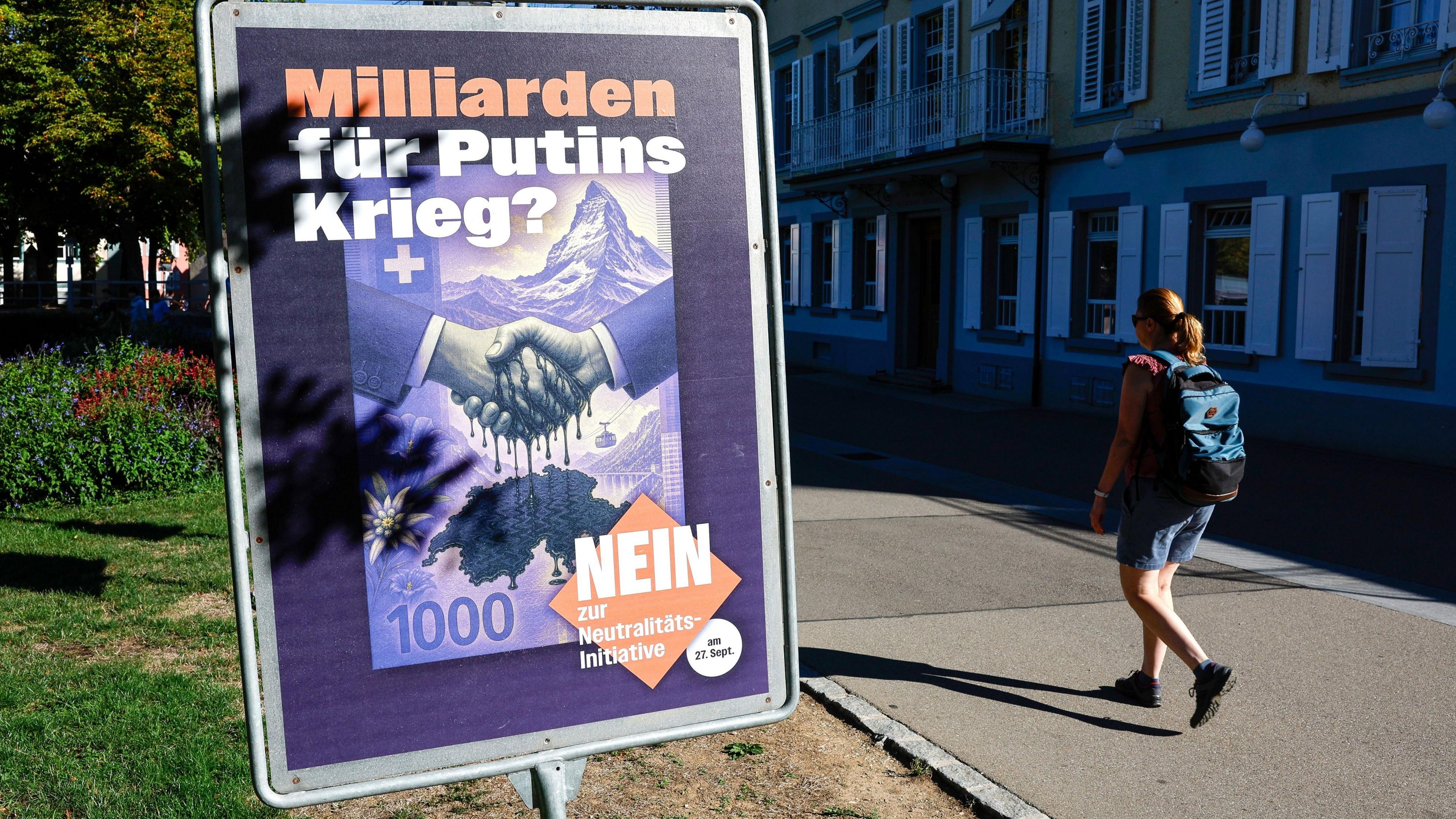

Swiss voters recently cast a decisive 'no' in a referendum that sought to tighten the country’s neutrality doctrine. The measure would have obliged Switzerland to secure United Nations approval before imposing sanctions—an action many see as a cornerstone of the nation’s diplomatic posture.
Official results show that around 72% of voters rejected the proposal, ensuring the nation can keep its sanctions agenda flexible. The vast majority felt that neutrality should not be interpreted as an absolute restriction, but rather as a principle that permits action when international rules are breached.
The initiative received support from Moscow, the right‑wing Swiss People’s Party (SVP), and a small coalition of local politicians. In contrast, the federal government, the Social Democratic Party, the Liberals, and other major parties opposed the change, stressing the importance of maintaining Switzerland’s ability to react independently to global crises.
“People have a clear idea of what Switzerland’s neutrality is supposed to achieve,” noted Lukas Golder, co‑director of research institute GFS. Bern. “We are not rejecting neutrality. We are choosing to stand against Russia with sanctions where international law is at stake.”
Foreign Minister Ignazio Cassis underlined in a televised debate that the flexibility built into neutrality means it does not equate to indifference. “Neutrality allows us to act when violations of global rules occur,” he said, emphasizing that Switzerland is not abandoning its historical stance but refining its application.
The country’s neutrality first gained international recognition at the 1815 Congress of Vienna, and was legalised in the Hague Convention of 1907. It guided Switzerland through both world wars, allowing it to maintain a neutral stance while navigating complex geopolitical landscapes. Today, Switzerland’s direct democracy ensures that such pivotal policy decisions are subject to public vote, allowing citizens to shape the country’s international commitments.