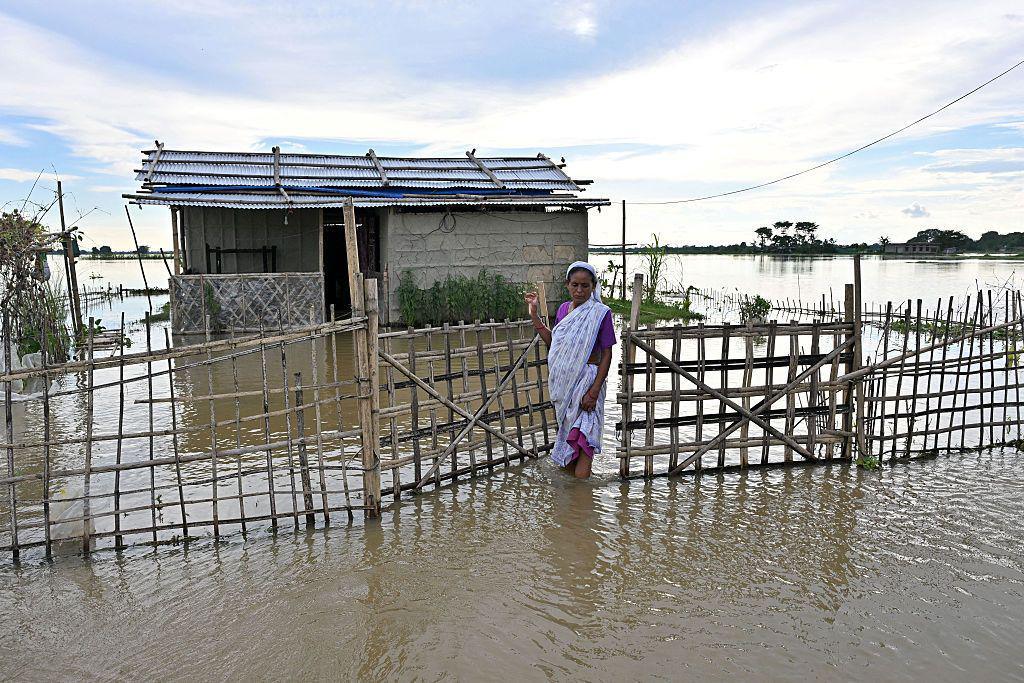
On the night of 19 July, a sudden deluge struck the village of Charing in Assam’s Sivasagar district. In the pouring floodwater, 97‑year‑old Lokada Duarah’s family, Bornali Baruah and her husband, had to lift her onto a makeshift raft built from banana tree trunks to reach safety.
“Everyone was trying to save themselves,” Baruah says, recounting how the flood had reached three to four feet deep by the time they trudged toward a relief camp on the national highway.
By evening, the water had risen to about five feet inside the family’s single‑storey house, leaving the home and its contents—over 300 goats, 300 ducks, 300 chickens and a farm feed machine—into rot and ruin. The disaster claimed 100 lives, and more than 1.2 million people across 25 districts were affected, with 45,600 needing relief and 252 camps set up nationwide.
Baruah, a 40‑year‑old former journalist turned livestock farmer, lost most of her animals and the only vehicle they owned. “There is no insurance system for goats here,” she says, explaining that none of her livestock were covered.
The floods were driven by an unprecedented confluence of heavy rains across Upper Assam and the neighbouring Mon district, causing the Brahmaputra and its tributaries to overflow. A speciality professor at Gauhati University notes that such intense flooding is beyond historical norms, fueled by sediment from the Tibetan plateau and pathways shaped by forest clearing and infrastructure projects.
Despite the devastation, the family still lives near their damaged home, refusing to relocate yet preparing for future floods. Baruah is learning to adopt measures such as constructing a raised platform and storing food and water, hoping to rebuild and coexist with the ever‑present threat of floods.