In brief
The eastern United States continues to face the brunt of a harsh winter, with sub-freezing temperatures causing devastation. In North Carolina, four homes fell into the ocean due to erosion worsened by recent storms. Meanwhile, over 70,000 residents in Tennessee are without power following a severe storm. These brutal conditions have also affected agriculture, with Florida farmers anxiously awaiting the thaw of frozen crops. As the death toll rises and frustrations mount over utility responses, the National Weather Service warns that the cold weather will persist.
RALEIGH, N.C. (AP) — Four homes blasted by icy winds on an eroding North Carolina island collapsed into the ocean, while Florida farmers anxiously awaited the thaw of frozen plants as over a week of sub-freezing weather gripped the eastern half of the United States.
On Monday, thermometers remained below freezing across the northern U.S. from the Dakotas to Maine, with forecasts predicting sub-freezing temperatures returning to the Southeast, including parts of northern Florida.
In the Carolinas and Virginia, residents dug out from deep snow while over 70,000 homes and businesses in Tennessee and Mississippi entered a second week without electricity due to previous ice and snow damage to power lines.
Nashville resident Terry Miles shared his struggles of enduring nine days without power while trying to insulate his living space using blankets. He resorted to cooking outdoors on a propane grill and was recently loaned a small gas generator to run some space heaters.
“We’re roughing it,” said Miles. “I’ve camped before, and it was easier than this.”
The deadly cold snap has taken its toll, with a death toll surpassing 110 across the affected states since January 24, including 13 hypothermia-related deaths in New York City alone.
Collapsed Homes on North Carolina's Outer Banks
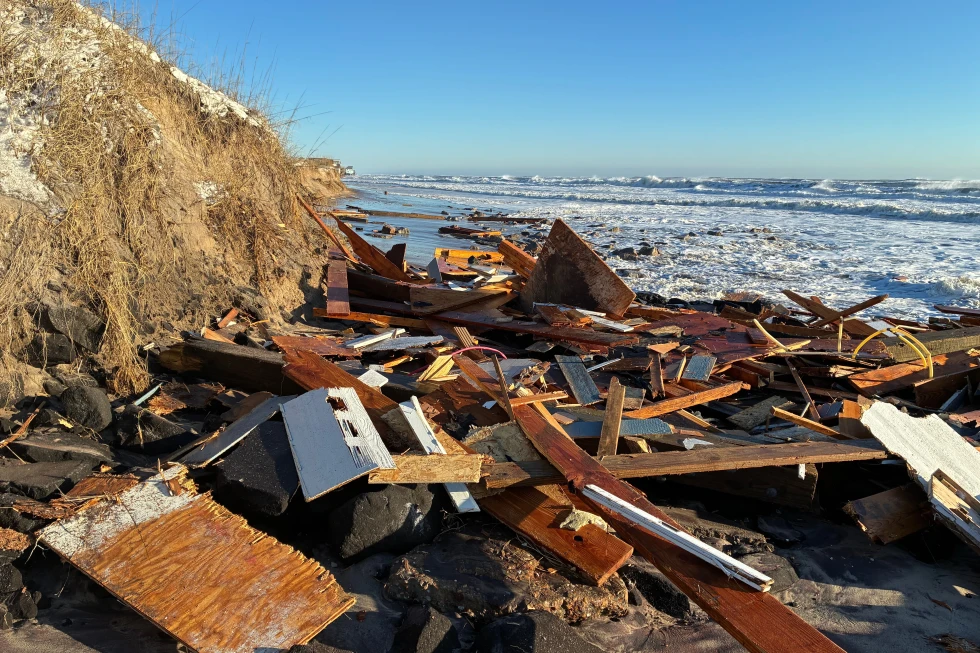
Over the weekend, four unoccupied homes in North Carolina's Outer Banks collapsed into the Atlantic Ocean due to severe weather conditions, part of a long-standing erosion problem on the barrier islands.
A bystander captured one of the houses falling into the sea amid piles of debris on the shoreline of Buxton, while more than two dozen houses have succumbed to the elements since 2020.
In Florida, farmers took precautionary measures by spraying water on plants to protect against extreme cold. However, many were awaiting the melting of protective ice to assess damage ahead of their busiest shipping season leading to Valentine’s Day.
Power Outages in Tennessee
The Nashville Electric Service faces scrutiny as frustrations rise among residents without power for over a week. With over 20,000 customers still affected, the utility estimates full restoration by February 9.
Mayor Freddie O’Connell announced a review of the utility’s storm response, describing their crisis communication as inadequate. Senator Marsha Blackburn also expressed outrage over the utility’s management during this severe storm.
Meanwhile, the National Weather Service continues to issue cold weather warnings as the region remains under the influence of arctic conditions.
With temperatures remaining low overnight, crews are working tirelessly to clear roads in Charlotte, North Carolina’s largest city, where nearly a foot of snow fell over the weekend.
“We are working around the clock to clear roads to restore normalcy,” stated Governor Josh Stein.