In brief
In recent months, independent booksellers across the world have seen unprecedented bulk orders that far exceed their usual weekly sales, sparking speculation that they are being bought for artificial‑intelligence training. A 2025 US court ruling cleared Anthropic’s use of books for AI training as fair use, while court documents reveal a “Project Panama” that literally scours and destroys old volumes to digitise them. The practice—called destructive scanning—has prompted ethical concerns from sellers about the loss of rare and historically significant texts. The debate joins a broader conversation about the place of physical books in a data‑driven world.
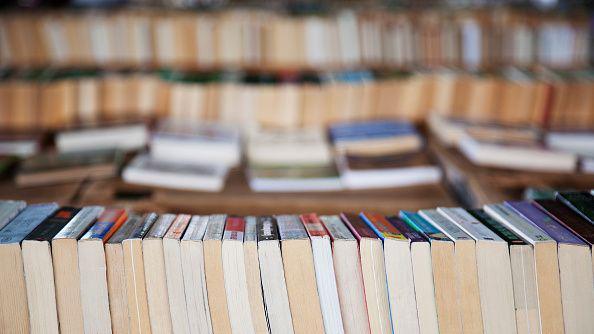
The secondhand market is buzzing with an unusual volume of trades that has publishers and collectors on edge. Independent booksellers report that a single bulk purchase can outpace the sales of a week’s worth of regular traffic—often taken by large online retailers or unsuspecting consumers.
A Seller’s Shocked Story
Stuart Manley, owner of Barter Books in Northumberland, noted that his shop can sell about 3,000 used titles in a typical week. Yet a Canadian buyer placed an order that would equal that volume in seven days. "I have never seen the like of this after thirty years in the second‑hand book trade," Manley said. His experience is echoed by sellers worldwide, who see their shelves emptied in a fraction of the time expected for retail sale.
Court Hand‑closes the AI Question
A 2025 US decision made the question concrete. Judge William Alsup ruled that providing books to AI firms for training does not violate copyright when the use is highly transformative. The ruling came after a lawsuit by three authors against Anthropic, which had been using the works to train its chatbot, Claude. The decision reflects a view that data generated for AI is akin to a new creation that does not infringe the original text’s rights.
Court filings also uncovered the name “Project Panama,” Anthropic’s codename for a goal to “destructively scan all the books in the world.” The project’s aim is to surface and digitise old volumes at a scale that requires books to be broken down and physically destroyed.
Destructive Scanning Explained
Destructive scanning involves sending a book to a facility where its spine is removed, allowing all pages to be scanned in bulk. After digitisation, the hardback is often shredded to recycle the material. Rare or obscure texts—Latin treatises, out‑of‑print novels—are especially prized because they can supply fresh training data for large language models.
Ethical Dilemmas for Sellers
The prospect of losing an edition that may be the last surviving copy creates a moral quandary. Writer Derek Walker of McNaughtan’s in Edinburgh described the experience: "A recent academic text published in only 100 copies, 75 of which are in libraries, might not be a huge loss if one copy is destroyed, but an 18th‑century unique edition is far more problematic."
Billions of used books—many of which may have floppy shelf life—could be repurposed for the next generation of AI. Yet the potential pulverisation of cultural heritage keeps the conversation at the fore of the industry.
Learn more about how AI is reshaping the world of books and beyond: Sign up for our Tech Decoded newsletter and stay informed.