In brief
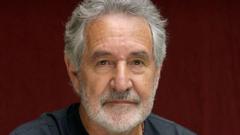
Breyten Breytenbach, a prominent figure in the fight against apartheid, has died peacefully at his home in Paris. Known for his fierce advocacy for human rights and prolific literary contributions, he was surrounded by his wife Yolande during his final moments. Born in South Africa and later exiled, Breytenbach's work spanned poetry, novels, and paintings that challenged the oppressive regime. His courageous return to South Africa in the 1970s led to imprisonment for activism, yet he continued to create impactful literature, including his renowned memoir, "The True Confessions of an Albino Terrorist." After his release, Breytenbach critiqued not just apartheid but also the post-apartheid government, advocating for justice and equality throughout his life. He is survived by his family and a vast body of work that continues to inspire.
Breyten Breytenbach, the renowned anti-apartheid writer and activist, has passed away aged 85 in Paris, his family announced. Surrounded by his beloved wife Yolande, he slipped away peacefully in his sleep. A man of immense talent and passion, Breytenbach was a pivotal figure in the anti-apartheid struggle, earning accolades for both his literary genius and his unwavering commitment to a more equitable world.Born on September 16, 1939, in South Africa's Western Cape, he lived much of his life in exile, yet remained deeply connected to his homeland. As a member of the Sestigers, a group of Afrikaans writers advocating for social change, he criticized the racist apartheid state and championed the beauty of the Afrikaans language. Despite his love for Afrikaans as a language, he rejected its association with the oppressive Afrikaner political identity.In 1960, he left South Africa, eventually settling in France where his life was marked by love and activism. Married to Yolande Ngo Thi Hoang Lien, he faced the hardships of South Africa's strict apartheid laws, which barred interracial marriages. Breytenbach's secret return to South Africa in 1975 led to his arrest for terrorism, resulting in a seven-year prison sentence during which he continued to write passionately.His release, aided by French President François Mitterrand in 1982, allowed him to pen "The True Confessions of an Albino Terrorist," reflecting on the horrors of imprisonment. Post-apartheid, he remained a vocal critic, challenging the African National Congress for straying from its ideals.Beyond South Africa, Breytenbach's influence stretched globally, illustrated in his poignant critique of Israel's policies in Palestine through an open letter published in The Guardian. Over his lifetime, he produced more than 50 books, with various works translated into multiple languages. His artistry extended to surreal paintings exploring themes of captivity and liberation, earning him national recognition including the title of Knight of the Order of Arts and Letters from France.Breytenbach is survived by his family, including his wife, daughter Daphnée, and two grandsons, leaving a lasting legacy of courage and creative brilliance that continues to resonate.