
In brief
In response to escalating violence related to demands for statehood in Ladakh, Indian authorities have imposed a curfew in Leh. Protests have intensified following claims of unmet promises after the region lost its semi-autonomous status in 2019. Activist Sonam Wangchuk has been implicated in inciting the unrest, which led to casualties and injuries among both protesters and police.
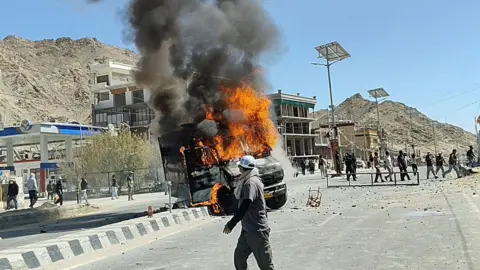
Indian security forces have imposed a curfew in Leh, the capital of the Himalayan region of Ladakh, after at least four people were killed in violent clashes between police and protesters demanding statehood for the federal territory.
Dozens were also injured, and an office of India's ruling Bharatiya Janata Party (BJP) was set on fire during the unrest on Wednesday.
The government has blamed activist Sonam Wangchuk, who has been leading the protests, for inciting violence, although he denies these accusations.
Ladakh, which has a mix of Muslim and Buddhist populations, lost its semi-autonomy in 2019 when the BJP government divided it from the former state of Jammu and Kashmir, imposing direct rule on both regions.
The Leh region, where the violence broke out, is located between India, China, and Pakistan. The Buddhist community has long sought a separate region, while the Muslim-majority Kargil district prefers integration with Indian-administered Kashmir.
Sine 2019, both communities have united in seeking the restoration of statehood and greater autonomy, which would include job quotas. The exact cause of the violence is uncertain, but protests have been ongoing in the region for months.
The Indian federal home ministry accused Wangchuk of inciting unrest through misleading statements, including comparisons of the protests to Arab Spring movements.
Protesters attacked and set fire to the BJP's local office, damaging a police vehicle and injuring about 30 officers, prompting police to open fire, resulting in reported casualties.
After the violence, Wangchuk suspended a hunger strike he began on 12 September, appealing for calm and attributing the protests to escalating frustration among unemployed youth.
Local activists, including Wangchuk, claim the promises made post-revision of Ladakh’s status regarding local political power have not materialized, leaving the region unprotected from external economic interests.
The federal government, however, refutes this, asserting it has engaged in dialogue with local leaders since 2023, suggesting “phenomenal results.”
Investigation into the violence has been launched by Ladakh's Lieutenant Governor. Meanwhile, more meetings between protesters and officials are scheduled to take place soon.
}