
In brief
A new bill in Colombia's Congress seeks to ban merchandise that glorifies Pablo Escobar, sparking discussions among victims' families, vendors, and lawmakers about the implications for social memory and local economies.
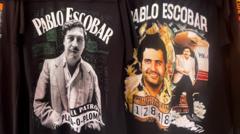
In an attempt to address the complex legacy of Pablo Escobar, a proposed law in Colombia's Congress is gaining attention as it aims to ban the sale of merchandise celebrating the notorious drug lord. This discussion comes in light of the painful memories associated with Escobar's reign of terror, during which he orchestrated violence that claimed thousands of lives, including that of Gonzalo Rojas' father, who was killed in the 1989 Avianca flight bombing.Gonzalo Rojas, now an advocate for victims, recalls the tragic day when he lost his father to an act of terror planned by Escobar and his Medellín cartel. Escobar's death in 1993 marked the end of an era defined by drug wars and violence, yet his presence continues to loom large. His image has become a commercial sensation in Colombia, featuring in numerous souvenirs, from mugs to T-shirts, predominantly at tourist hotspots.The new bill attempts to change this narrative by prohibiting the sale of items glorifying Escobar and other convicted criminals. Juan Sebastián Gómez, a Colombian Congressman and the bill's co-author, asserts that treating such historical figures as mere commodities diminishes the gravity of their actions and the suffering they caused. Violators of the proposed law would face fines and temporary business suspensions.However, this initiative faces significant pushback from local vendors who argue that the ban could jeopardize their livelihoods. Joana Montoya, a stall owner in Comuna 13, insists that selling Escobar-related products is vital for her family's survival, contributing up to 60% of her income. With Medellín welcoming tourists eager for unique souvenirs, some vendors claim that such memorabilia is a means of supporting their communities.The bill, if passed, would allow a transitional period for vendors to adjust to the new regulations. Gómez and supporters believe that Colombia has far richer cultural assets to share, rather than a legacy intertwined with drug lords. The proposed law seeks to shift the focus from glorifying criminal figures to honoring the victims of their crimes.Opponents of the commercialized image of Escobar, like shop assistant María Suarez, advocate for a ban, deeming it unethical to profit from items linked to an individual responsible for immense suffering. The historical implications of Escobar's actions remain a subject of public discourse, with voices like Rojas calling for a stronger emphasis on educating future generations to foster a more accurate understanding of that dark chapter in Colombia's history.The bill has the potential to ignite a national conversation reflecting on the commercialization of criminal notoriety, akin to how figures like Hitler and Mussolini are treated in other countries. Medellín's mayor has expressed support for the legislation, viewing it as a necessary measure to respect the victims and reshape the city's identity beyond its violent past.As discussions continue and the bill progresses through Congress, the outcome could impact how Colombia reconciles its tumultuous history while shaping a narrative for the future.
