In brief
This article explores the experiences of healthcare workers and ordinary citizens caught in the crossfire in Ethiopia as conflicts escalate, highlighting the personal and societal toll of war.
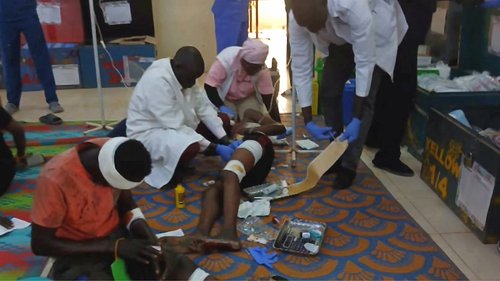
Before Ethiopia plunged into civil war in late 2020, Mehari, a 25-year-old doctor in Axum, could easily commute to work. The onset of fighting between government forces and the Tigray People's Liberation Front (TPLF) altered her life drastically, leading to the closure of public transportation. In this turmoil, Mehari began walking 40 minutes daily to the hospital, fearful of encountering soldiers after curfew. She faced the stark realities of war firsthand, treating victims while fearing for her safety. "Maybe being killed could be the easiest thing that happens to you," she confided.Mehari vividly recalls her initial experiences when the war erupted. The sudden blackout and inflow of injured patients shocked her, marking a dramatic shift from treating traffic accident victims to those affected by bullets and airstrikes. Surrounded by stories of unimaginable suffering from patients fleeing violence, she described the chaos: “It was too much to process.”As a vast, multicultural nation, Ethiopia's internal struggles stem from deep-rooted ethnic tensions. Prime Minister Abiy Ahmed, who rose to leadership on a tide of hope in 2018, faced challenges in integrating Ethiopia's numerous ethnic groups. Resentment brewed under his governance as he excluded Tigrayans from positions of power and described the TPLF in harsh terms, intensifying pre-existing divisions. Following a regional election in 2020, tensions escalated when the TPLF attacked a military camp in what they deemed a pre-emptive strike against government forces. The federal government, already recognizing the potential for violence, dispatched troops to Tigray, escalating the conflict that has now drawn in external forces, including Eritrean troops.In a country rife with emotion and division, ordinary lives are dramatically impacted every day by the ongoing violence. As healthcare workers like Mehari navigate an increasingly dangerous landscape, their resilience and dedication to healing and survival emerge as powerful reminders of the human cost of conflict.