
In brief
Amid significant political transitions in Syria, Interim President Ahmed al-Sharaa has announced a national dialogue conference, inviting 600 delegates to contribute recommendations to guide the formation of a new transitional government. While some express optimism, others criticize the exclusion of the Kurdish-led administration, fearing the rushed process won't address the country's complexities.
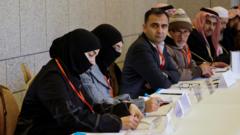
Syria's interim president, Ahmed al-Sharaa, has hailed a national dialogue conference as a pivotal moment for the country's future, asserting that Syria has a "historic" chance to rebuild following the regime's turmoil. Speaking to a gathering of 600 delegates in Damascus, Sharaa stressed the need for unity and the integration of armed groups into a newly structured Syrian military, asserting that true strength lies in the nation’s cohesiveness.The conference aims to gather recommendations covering crucial topics, including transitional justice, economic reforms, and the establishment of a new constitution to guide the forthcoming transitional government. Nonetheless, critics have expressed concerns that the conference is being hastily organized, particularly noting the absence of the Kurdish-led Syrian Democratic Forces (SDF) and the Autonomous Administration of North and East Syria (AANES), which control significant territory in northeastern Syria.Sharaa's remarks came after a series of dramatic changes, including the ousting of Assad and the proclamation of his interim presidency amidst ongoing civil unrest that has left approximately 600,000 dead and millions displaced. He emphasized the significance of using the current conditions to serve the people's interests and honor historical moments, promising a transitional justice body would be established to account for past crimes during the civil war.Six working groups are set to be formed at the conference to tackle specific issues related to the transitional government, although the absence of key stakeholders has drawn sharp criticism. The SDF, which has refused to assimilate into the new military structure, voiced discontent over its exclusion, with officials arguing that the process reflects a superficial effort, undermining broader social and ethnic representation necessary for sustainable peace.As the international community continues to scrutinize Syria's political landscape, they urge the inclusion of diverse ethnic and religious groups in order to foster an effective political resolution. A complex web of sanctions imposed on Assad's government underscores the delicacy of the situation, with recent announcements from the EU suggesting a shift towards humanitarian support, albeit conditional on respect for minority rights in Syria's future governance.In the context of such significant change, the outcomes of the conference, along with the response from various local factions and the international community, will be crucial in determining Syria’s path ahead. The world watches as officials navigate the challenging landscape of reconciliation and rebuilding in a nation scarred by years of conflict.

