

Peru's presidential election remains deadlocked as vote counting continues, with an early Ipsos poll showing left-wing candidate Roberto Sánchez at 50.3% and right-wing Keiko Fujimori at 49.7%. This razor-thin margin echoes previous elections that have dragged on for days or weeks, with over 91% of votes officially tallied.
The contest pits Fujimori, daughter of former president Alberto Fujimori and a political fixture, against Sánchez, who pledges sweeping left-wing reforms. Crime and political instability dominate voter concerns, with Fujimori promising military crackdowns on organized crime and Sánchez advocating greater state control of natural resources.
Ipsos data reveals Fujimori dominates Lima and coastal regions, while Sánchez sweeps rural areas and the Andes. Both campaigns face uncertainty: Sánchez called the early lead an "important reaffirmation of democracy," while Fujimori insisted the result was a "dead heat" requiring full ballot counts.
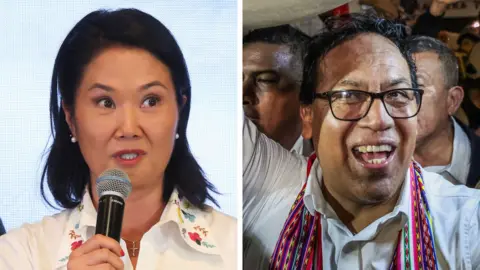
Voters increasingly demand change after Pedro Castillo's imprisonment following his attempted constitutional crisis. Sánchez's campaign promises economic reforms including tax reviews and mining contract renegotiations, while Fujimori's supporters echo their father's legacy of tough crime policies.
As ballots from remote regions continue to arrive, supporters on both sides prepare for protests. "We voted for change," declared a street vendor. "If we don't win, we will go out into the streets," she vowed, highlighting the election's deep social fractures.
This historic deadlock mirrors 2021's tense runoff, raising fears of prolonged instability. With the ONPE authority confirming smooth voting procedures but recount uncertainty, Peru's path to democracy remains perilously unresolved.

