In brief
Pakistan’s government has rolled out Foreign Media Facilitation Guidelines for 2026, requiring foreign media—including Pakistani nationals—to secure No Objection Certificates before covering events outside Islamabad, Karachi and Lahore. The move is widely criticised by journalist organisations and seen as a crackdown on press freedom in a country already ranked low on the World Press Freedom Index. Critics argue the guidelines risk stifling independent reporting and create space for misinformation. In response, international journalists and the Federal Union of Journalists are pushing for a meeting with the information minister. The government maintains the measures aim to streamline administrative oversight and secure national security.
The Pakistani government today announced the Foreign Media Facilitation Guidelines 2026, a set of rules that will require all foreign media reporters—whether they are nationals or living abroad—to obtain a No Objection Certificate (NOC) before they can cover stories anywhere outside Islamabad, Karachi and Lahore.
Acting on a stalled precedent of media oversight, the guidelines do not set a fixed timetable for granting NOCs, leaving journalists to wait months or sometimes receive no response at all. This effectively curtails real‑time coverage from regions that are often the focus of breaking stories, including the volatile Kashmir corridor.
Press freedom organisations, such as Reporters Without Borders and the Federation of Pakistani Journalists, have condemned the practice as a “self‑inflicted attack on media independence” and warn that it could consolidate the spread of misinformation. The government’s spokesperson framed the move as a “mechanism for better coordination and access” rather than censorship.
In addition, the guidelines state that accreditation can be revoked for journalists acting against “ideology, sovereignty, security or public order” – a clause critics argue is vague and might be used to remove dissenting voices. Legal scholars note there is no statutory backing, as the guidelines are issued under a ministry’s internal rules.
International correspondents and the Federal Union of Journalists are already calling for a meeting with the Information Minister to discuss the implications, especially after a series of WhatsApp messages demanded that reporters covering Pakistan‑administered Kashmir “return immediately” and apply for an NOC.
The regulatory change comes amid months of violent protests in Kashmir, where internet curbs have limited the verification of third‑party reporting. The government argues that such controls serve the country’s security interests and the need to centralise media traffic.
The restrictions and the media backlash place Pakistan flat on the world map, ranking 153 out of 180 on the World Press Freedom Index, and underscore a broader trend of tightening media regimes in the region.
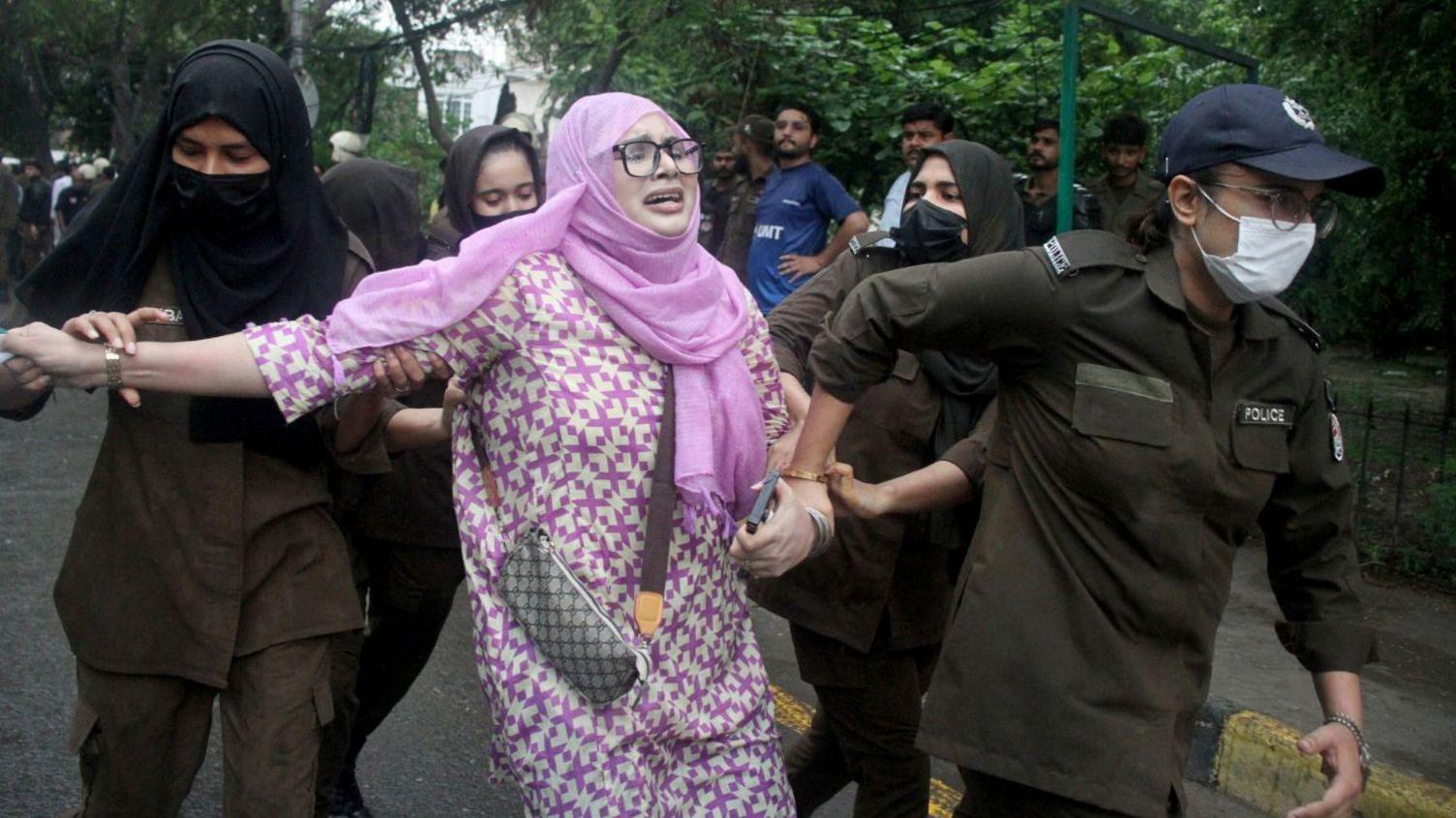
A protester is detained as others gather in support of the banned Joint Awami Action Committee (JAAC) during a demonstration in Lahore, Pakistan.