NASA Names Artemis III Crew as Mission Shifts to Low‑Earth Orbit
NASA has announced the astronauts selected for its Artemis III lunar program, but the mission will remain in low‑Earth orbit, without a lunar landing or surface activity.
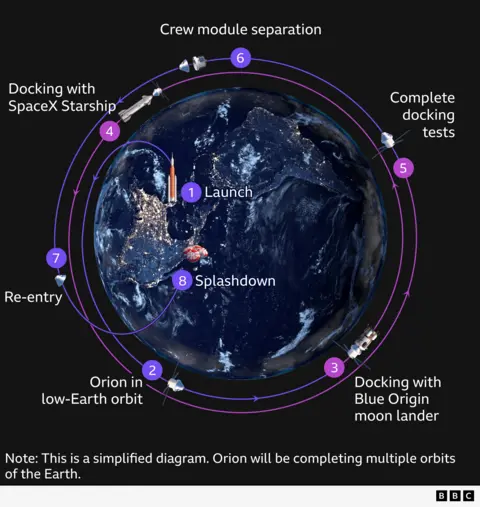
The original plan, dating back to Apollo 17’s era, had four crew members set to land at the Moon’s south pole for a week on the surface. In February, NASA announced a change, opting for a fly‑by mission that will orbit the Moon and dock with prototype landers in Earth orbit.
NASA Administrator Jared Isaacman described the mission as the most complex ever, noting that it will involve record‑setting coordination of heavy‑lift rocket launches across government and commercial spaceflight partners.
Crew roles: Commander Randy Bresnik, Pilot Luca Parmitano (ESA), Mission Specialists Andre Douglas and Frank Rubio, with backup astronaut Bob Heintz who can fill any role. Heintz has logged 170 days in space and is a test pilot.
The mission’s shift to Earth orbit follows delays in SpaceX’s Starship, which cannot reach the Moon without in‑orbit refueling—a technology still untested. Additional setbacks include a New Glenn rocket explosion during a hot‑fire engine test at Blue Origin’s launch pad, potentially delaying the Blue Moon cargo lander schedule.
A GAO report in March 2026 highlighted limited progress on critical refueling technologies, while the New Glenn blow‑up raises concerns about the launch pad’s readiness. These hurdles mean the Artemis rocket lineup may face an uncertain timeline.
NASA’s optimistic schedule has Artemis III set for 2027, Artemis IV for a lunar landing in early 2028, and Artemis V later that year to begin base construction. Independent experts label these timelines ambitious.
President‑era directives and China’s announced Moon landing target of 2030 add pressure to deliver astronauts to the Moon by 2028. NASA’s Isaacman stated a commitment to helping Blue Origin recover from the explosion, but the time needed remains uncertain.