Some churches in Mumbai are now asking worshippers to sign a written statement affirming that they came to pray on their own free will, a practice that has sprung up in response to Maharashtra’s new anti‑conversion law.
Visitors write down their names, add an ID number in some cases and sign, certifying that no one forced or enticed them to attend. The forms have no official standing, but churches keep them in case a prayer meeting is later challenged as an illegal conversion.
The practice began in late August, just before the law took effect. Maharashtra’s legislation bars conversions obtained through force, fraud, coercion or inducement and mandates that anyone wishing to convert voluntarily notify authorities ahead of time. Unlawful conversions can attract prison terms up to seven years, or ten years for repeat offenders.
While government officials claim the law protects vulnerable people from coercion, critics argue that the vague definitions and stiff penalties risk criminalising ordinary religious practice and even interfaith marriages. The new code allows relatives to report suspicious conversions, effectively opening police investigations into private choices.
In Mumbai, the law’s ripple has been felt most strongly by minority Christians. Devdan Tribhuvan, a fourth‑generation Christian from Vasai who helps legal‑aid organisations, reports a surge in inquiries about disrupted prayer meetings rather than court cases.
“It’s no longer just about converting people; every gathering raises the question of whether it counts as a conversion,” he says. “People fear that even a casual prayer can bring police scrutiny.”
The concerns are echoed in July investigations by The Indian Express, which documented five disruptions of Christian prayer meetings between April and July, followed by nine police cases—seven against worshippers or organisers and two against members of the right‑wing Bajrang Dal group.
Critics warn that this trend could target interfaith couples. Indian law permits marriages across religions without conversion, yet requires a month’s notice, a detail that can expose couples to family pressure or political backlash.
Samsuddin Tamboli, president of the Muslim Satyashodhak Mandal, and former Bombay High Court judge Abhay Thipsay note that any benefit—employment, education, marriage promise, or a "better lifestyle"—can be interpreted as allurement, making the law almost too broad for practical application.
Local authorities remain silent on the law’s operational effects, but state minister Pankaj Bhoyar maintains that it respects religious freedom while curbing forced conversions.
For Christians gathering in Mumbai’s bustling suburbs, the new rule feels like a new gatekeeper that may shift the balance between faith and legal scrutiny. A mother of 50‑plus weekly attendees said, “If someone else comes to pray, we can’t stop them. That is the right to choose.”
In a broader cultural context, faith leaders argue that adults have the right to decide personal matters—loving, marrying, believing—without state interference, challenging the logic behind a legal requirement that may ensnare ordinary prayers.
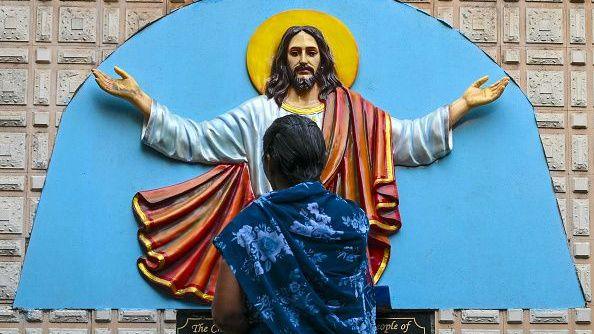
Image caption: A Christian devotee prays in front of a statue of Jesus Christ during a Good Friday procession in Mumbai on April 3, 2026.