In brief
On Friday a magnitude‑7.3 earthquake struck off the southern Mexican coast near Puerto Madero, producing a tsunami warning that extended to coastal areas of Mexico, Guatemala and El Salvador. Authorities recorded waves up to 0.3 m and advised beach closures, but reported no fatalities or significant damage. Aftershocks ranging from 4.7 to 6.0 followed over the next days. The US National Oceanic and Atmospheric Administration issued advisories, urging residents to stay alert and heed local instructions.
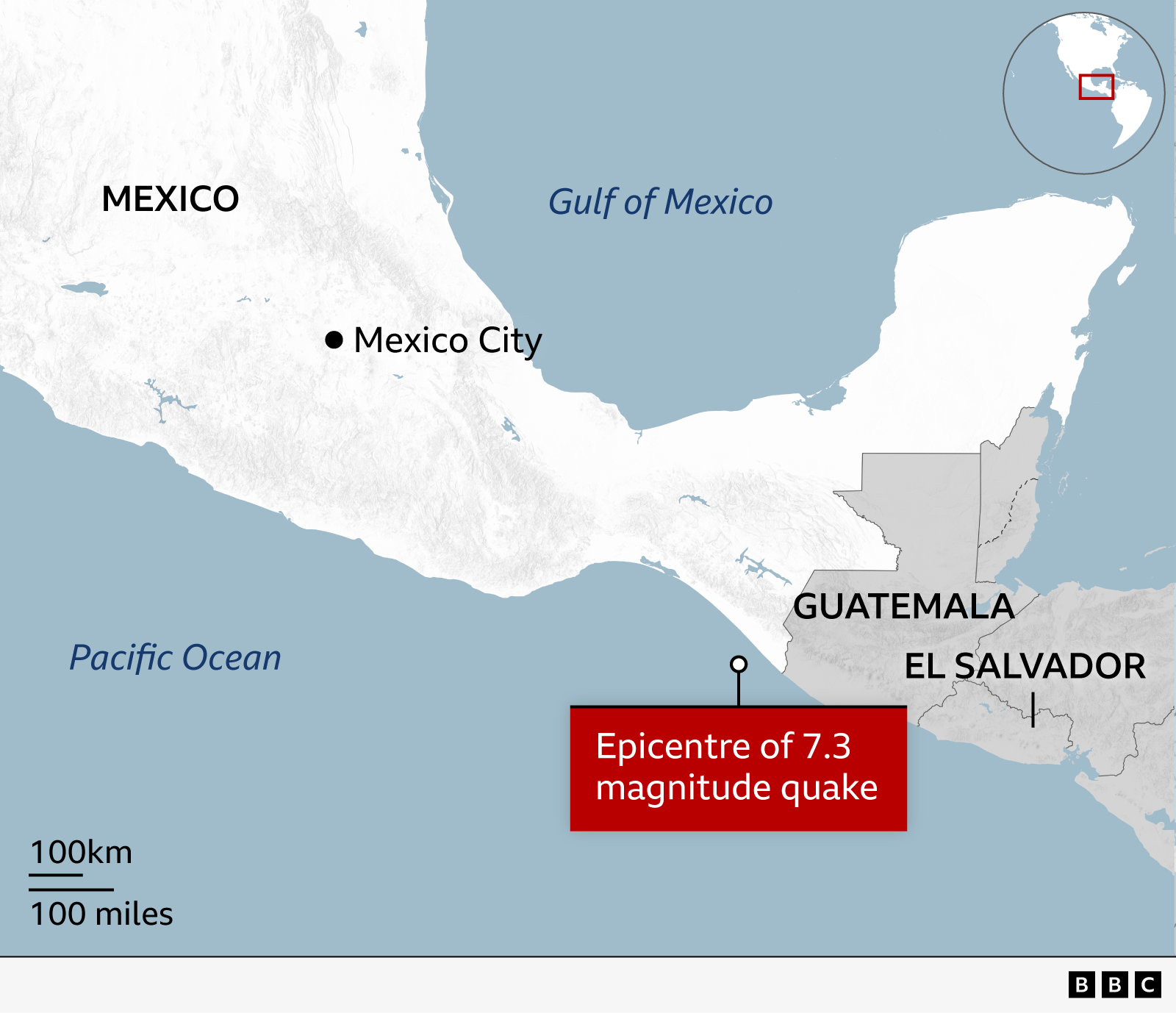
A powerful worldwide‑scale quake fractured the Pacific cooler off the southern coast of Mexico on Friday, producing a tsunami warning that sent ripples of concern from the Pacific shores of Mexico, Guatemala and El Salvador. The epicentre lay near the fishing town of Puerto Madero, approximately 290 km southeast of Mexico City, at a 15.2 km depth, according to the United States Geological Survey (USGS). Though locals felt the tremor strongly, no fatalities or significant damage have yet been reported in the affected states of Oaxaca and Chiapas.
Mexican navy secretary Admiral Raymundo Morales told reporters that “no serious impact” had been observed, but urged people to stay away from beaches. Correspondingly, local governments in Oaxaca, Chiapas and adjoining coastal jurisdictions placed beach closures and advised residents to remain vigilant. Several earthquakes’ aftershock series have persisted since the main shock, with magnitudes ranging from 4.7 to 6 in the following hours.
The U.S. National Oceanic and Atmospheric Administration (NOAA) issued a tsunami warning for the high‑risk Pacific coasts, forecasting waves of up to 0.3 m above tide level at places such as Puerto Madero and Chiapas. In El Salvador, waves reached similar heights, prompting some residents to evacuate suddenly from their homes. NOAA emphasised that a tsunami may persist for minutes to an hour, advising coastguard and emergency agencies to update locals with real‑time information and to follow national emergency protocols.
Guatemalan President Bernardo Arévalo reported that the country’s emergency agencies were on alert after an associated magnitude‑5.6 quake centered in Quetzaltenango. No fatalities have been recorded so far; the government urged citizens to remain calm and heed official directions issued through the X platform. The map below illustrates the point of impact and the area affected by the tsunami warning.
Authorities continue to monitor seismic activity and will issue follow‑up alerts if conditions warrant. Residents and travelers at risk have been told to heed guidance from local authorities, stay clear of the shoreline and use official social media channels to receive updates. While the immediate aftermath shows no extensive damage, the aftershocks remind the region of its persistent vulnerability to tectonic activity.
Source: Reuters and national agencies, 17 July 2026.