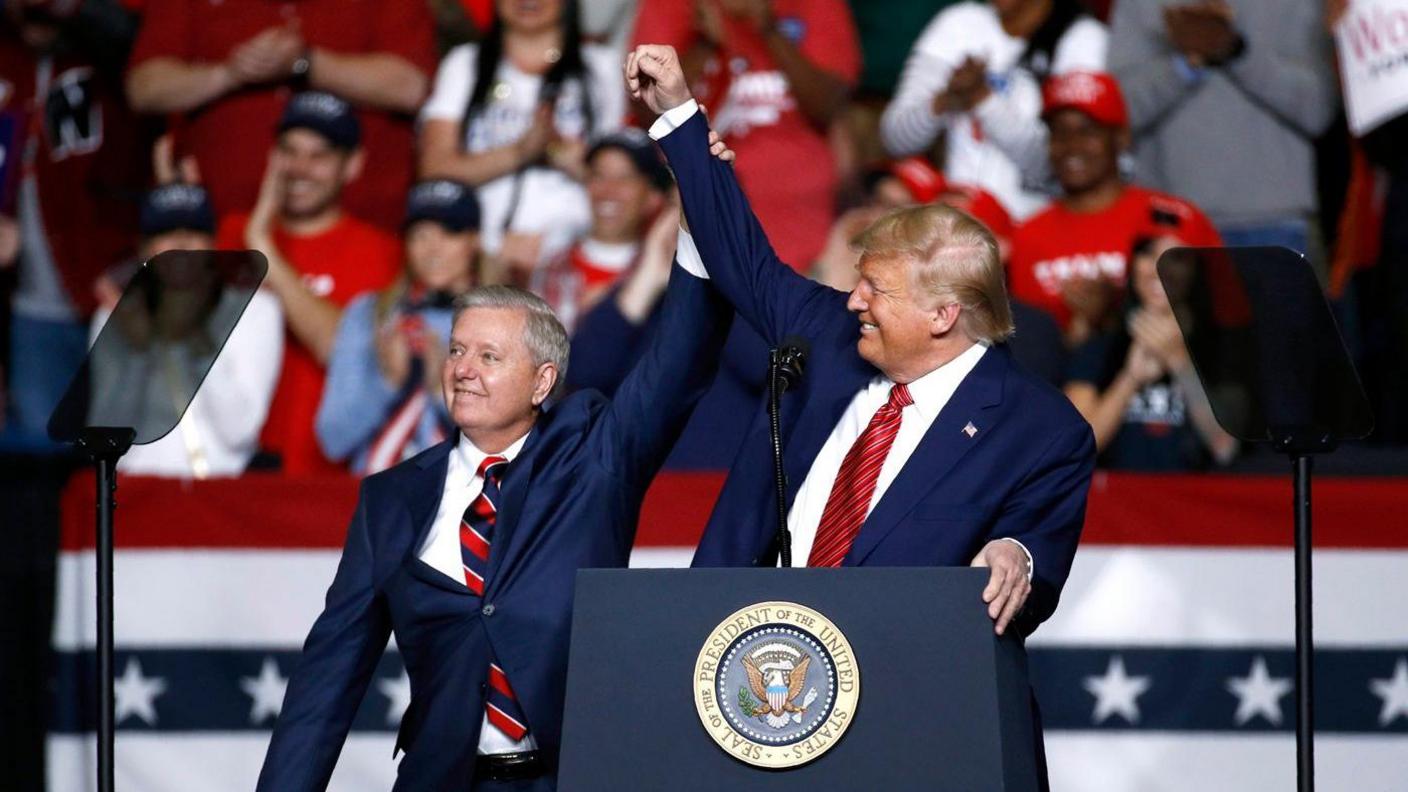
Senator Lindsey Graham, who passed away at 71, exemplified political resilience in an era of radical change.
His 23‑year tenure in the Senate was marked by a hallmark principle: keep the government moving even when the wind shifted.
Beginning in the early 2000s, Graham was a firm ally of Senator John McCain, a conservative known for his independent streak. In 2015, he even campaigned as President with a message that every side could find common ground, promising to open a “bar” in the White House and invite bipartisan cooperation.
When Donald Trump’s 2016 presidential run dismantled established norms, Graham’s early reservations became public. He labeled Trump a “race‑baiting, xenophobic, religious bigot” and, after losing the 2020 election, called for a sharp break with the former President.
Nevertheless, once Trump secured the presidency, Graham’s stance changed. He became a vocal defender of Trump’s policies, championing the confirmation of Brett Kavanaugh and supporting judicial appointments. He also back‑ed Trump’s Middle Eastern actions, urging continued strikes until Iran’s regime collapsed.
Graham’s later shift peaked during the 2021 Senate trial, where he voted to acquit Trump on impeachment charges. In 2023, he publicly praised Trump as a “good” president and clarified his decision to support him again, citing policy outcomes rather than loyalty à la carte.
Beyond partisan politics, Graham maintained working relationships with some Democrats, underscoring his ability to navigate a polarized Senate. His death leaves South Carolina without a seasoned Senator who possessed seniority, influence and the ability to negotiate across the aisle.
Republican Governor Henry McMaster will appoint a temporary replacement, and a primary will seek a permanent successor. The loss of Graham’s experience may impact bipartisan efforts, while the new Senator must build credibility in a highly polarized environment.