In brief
Abu Mohammed al-Jawlani, also known as Ahmed al-Sharaa, has strategically reinvented himself amidst the Syrian civil war, distancing from jihadist associations to gain legitimacy as a rebel leader. His group, Hayat Tahrir al-Sham (HTS), aims to position itself as a viable governing force in opposition to President Assad.
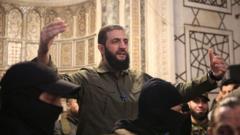
In a significant shift from his jihadist past, Syrian rebel leader Abu Mohammed al-Jawlani, whose real name is Ahmed al-Sharaa, has opted to use his birth name in official communications as he seeks to bolster his credibility amidst Syria's changing political landscape. His actions come on the heels of recent military advances that have positioned Hayat Tahrir al-Sham (HTS) as a dominant rebel faction. This marked transformation is not entirely new; over the years, Jawlani has skillfully altered his public image, both in his statements and appearance.Jawlani's journey began in Saudi Arabia in 1982 before transitioning to Syria, where his involvement in jihadist activities began in Iraq linked to al-Qaeda. A pivotal moment in his career occurred when he was sent to Syria to establish the al-Nusra Front, a group that initially attempted to conceal its ties to al-Qaeda. Tensions escalated in 2013, leading to a split from the Islamic State, and Jawlani ultimately aligned with al-Qaeda to preserve a local base of support.In 2016, Jawlani severed ties with al-Qaeda and rebranded his faction to establish HTS, aiming to present a more palatable face to the local populace. Under his leadership, HTS has effectively governed the Idlib province through the establishment of the Syrian Salvation Government, offering public services while maintaining some Islamic laws.Despite recent protests against his rule, characterized by allegations of authoritarianism and suppression of dissent, Jawlani has taken steps to reform his image. This included addressing grievances and disbanding controversial security forces, though critics view these efforts as superficial. As HTS faces increasing scrutiny both locally and internationally, Jawlani's ability to balance his jihadist foundations with the need for political pragmatism may define his legacy and the future of rebel governance in Syria.As HTS continues its military campaign against the Assad regime, Jawlani's past remains a focal point for detractors. Yet, amidst the tide of armed conflict, his strategic decisions seem to reinforce his standing, as he presents a modernized vision aimed at consolidating power and fostering stability while opening diplomatic channels. The dual challenge of satisfying hardline elements within his ranks and appealing to a broader population grappling with the aftermath of years of turmoil exemplifies a complex path forward for both him and HTS.