
In brief
The continuation of Trump's tariffs significantly hampers Chinese small businesses, leading to halted productions and accumulating goods in warehouses. While companies hope for changes, the economic conflict raises concerns about future growth and job security.
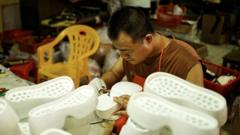
In the bustling city of Guangzhou, small business owners are voicing their frustrations as they face crippling economic challenges due to tariffs imposed by the Trump administration. "This is so hard for us," expresses Lionel Xu, surrounded by unsold mosquito repellent kits once favored at Walmart. His company, Sorbo Technology, manufactured numerous goods for the U.S. market, but now, their fate hinges on the uncertain lifting of Trump's staggering 145% tariffs on Chinese imports destined for American consumers.Similarly, Amy, a sales representative for the Guangdong Sailing Trade Company, reports halted production of ice cream makers. "All the products are in the warehouse," she states, echoing the experiences of others at the Canton Fair, a major trade fair showcasing thousands of businesses. These tariffs have turned the once vibrant marketplace into a hub of worry and uncertainty for traders dependent on U.S. clientele.Both presidents have engaged in a tit-for-tat scenario over tariffs, exacerbating the circumstances for over 30,000 businesses displaying their wares at the fair. The introduction of import levies has translated to higher prices for American consumers, heavily impacting typical buying behaviors. Many household items from China, including appliances and electronics, now come with inflated costs that U.S. companies are reluctant to pass on to customers.In this trade standoff, China's commercial response has manifested in policies aimed at buffering its economy and promoting domestic spending. However, consumer confidence wanes as rising housing prices continue to weigh on the middle class, resulting in cautionary spending habits. The fine line between severing ties with a major trading partner and the looming threat of economic recession in the U.S. creates an environment of tension and unease that firms like Xu's cannot ignore.Workers in the manufacturing hubs of Guangdong are also feeling the heat of the trade war. In the wake of reduced orders and production delays, many laborers report drastic pay cuts and job insecurity. "Things are not going well," laments one anonymous worker, revealing that he now earns a fraction of his previous salary. The long-term repercussions of the strained relationship between the two countries could drastically affect both economies, prompting some companies to pivot their focus towards exploring new international markets such as Europe and the Middle East. Optimism for a resolution remains muted, with little sign of negotiation between Washington and Beijing any time soon. As tensions rise, small businesses in China navigate a restless path ahead, hoping for quick relief but bracing for what may lie beyond the current economic storm.
