
In brief
Vice-President JD Vance's optimism about a UK-US trade deal comes amid ongoing discussions, yet both sides must navigate many challenges before a consensus is reached.
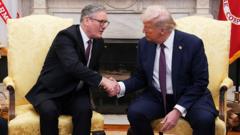
A recent meeting between UK Prime Minister Sir Keir Starmer and US Vice-President JD Vance has shifted the spotlight onto the potential for a UK-US trade deal. Vance underscored that the likelihood of an agreement is promising, attributing this potential to a more reciprocal relationship than the UK shares with other European nations. UK business and trade minister Sarah Jones echoed this sentiment, stating that discussions are still active but refraining from specifying a timeline for completion.However, amidst this encouraging rhetoric lies a critical question: what does "deal" truly entail? Following Sir Keir's February visit to the White House, the UK team opted to refer to the ongoing negotiations as an "economic deal." This terminology suggests that the discussions are not centering around a comprehensive free trade agreement encompassing a vast array of goods.In previous negotiations during President Trump's first term, discussions advanced until divisions emerged regarding crucial issues like drug pricing and food safety standards. Trump's administration had a vested interest in monitoring the degree to which the UK remained aligned with EU regulations post-Brexit. Currently, the focus appears to shift towards collaboration in science, technology, and artificial intelligence—essentially to mitigate existing tariffs rather than afford significant trade benefits.Notably, the US has imposed a 10% tariff on UK imports, a substantial point of contention, as this tariff is regarded as a standard rate applied to many other countries. While the UK maintains a more substantial trade volume with the US than vice versa, the notion that these tariffs are non-negotiable has become apparent, especially given that other nations experience even steeper tariffs.The UK's position becomes more delicate when factors such as exclusions for electronic products benefiting trade with China come into play, along with substantial 25% tariffs impacting the UK’s automotive industry. Such dynamics leave the UK feeling unduly burdened amid a climate of post-Brexit negotiations with the EU, where the goal is an ambitious realignment of export regulations designed to ease market access.As discussions unfold, the US could potentially tie UK negotiations to regional geopolitical aims, including a collective stance against China. This scenario poses a stark contradiction to the UK's ambitions of being a globally connected economy with reciprocal ties across diverse markets.Moreover, the recent volatility in US financial markets signals an urgent need for the US government to secure favorable trade relationships, particularly with its closest allies. This newfound urgency may enhance the UK's negotiation power compared to a month prior; whether Prime Minister Starmer is inclined to leverage this position remains to be seen, but the US's need for a smooth relationship with the UK can lead to unexpected shifts in bargaining dynamics.

