In brief
As the US government implements tariffs on garment exports from Cambodia and Sri Lanka, millions of workers fear for their futures. With significant reliance on the US market, these nations face economic turmoil, pushing workers to request action from President Trump to lift the burdensome tariffs.
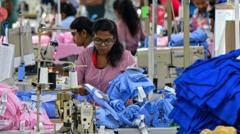
As the deadline for a trade deal approaches, garment workers in Cambodia and Sri Lanka are confronting uncertainty as the US prepares to impose new tariffs on apparel imports from these countries. The looming economic threat is particularly alarming for those already struggling to make ends meet, with many workers fearing job losses that could devastate their families.In mid-July, after a grace period for negotiations lapsed, the US government notified several Asian nations, including Cambodia and Sri Lanka, about tariff rates set to take effect on August 1. While the rates are lower than previous proposals, the figures—36% for Cambodia and 30% for Sri Lanka—still strike terror into the hearts of garment workers. These nations are integral to the garment supply chains of major American brands like Nike, Levi's, and Lululemon."Without our jobs, how will we feed our children?" expressed Nao Soklin, a Cambodian garment factory worker, who, along with her husband, makes a modest income stitching bags for long hours. Their earnings of $570 a month barely cover living expenses for their family.For Cambodia, garment exports to the US reached over $3 billion last year, critical to its economy and job market, employing approximately 900,000 people. Meanwhile, Sri Lanka’s garment sector, employing around 350,000 individuals, earned the country $1.9 billion in the same period. As Sri Lanka’s Joint Apparel Association Forum warned, higher tariffs threaten its competitiveness against countries like Vietnam who have secured lower rates.Efforts to renegotiate the tariffs are underway. Sri Lankan officials are in discussions to secure more favorable terms, while Cambodia seeks to lower its imposed tariffs, with both nations recognizing the importance of these exports for their economies.Former US President Trump justified the tariffs as a means to create balance in trade relations, but analysts argue they overlook the mutual benefits from existing agreements. Critics emphasize that such aggressive tariff strategies undermine decades of progress in developing countries like Cambodia and Sri Lanka, whose industries have flourished under supportive trade conditions.The heightened tariffs also exacerbate existing vulnerabilities in these countries, particularly among women who comprise a large majority of the garment workforce. With already low wages, potential layoffs could lead to an increase in poverty, threatening food security for families dependent on these jobs.Workers in Cambodia and Sri Lanka express desperation and hope, appealing for intervention. An Sopheak, a garment worker in Cambodia, said, "We pray every day that President Trump will lift the tariff." Facing uncertainty, some workers contemplate migrating to Thailand for employment, illustrating the urgent necessity for constructive resolutions in an increasingly challenging trade landscape.