In brief
Arkady Dvorkovich, president of the International Chess Federation (FIDE), announced that he would voluntarily suspend his duties after the EU added him to its sanctions list for supporting Russia’s annexation of Crimea. The Russian former deputy prime minister faces a travel ban and asset freeze, a decision that Ukraine praised as a crucial victory. Analysts note the sanction could curb Russian influence in chess, a sport historically used by Russia as soft power. Dvorkovich’s future remains uncertain, sparking speculation that his departure may herald a new era for the chess world.
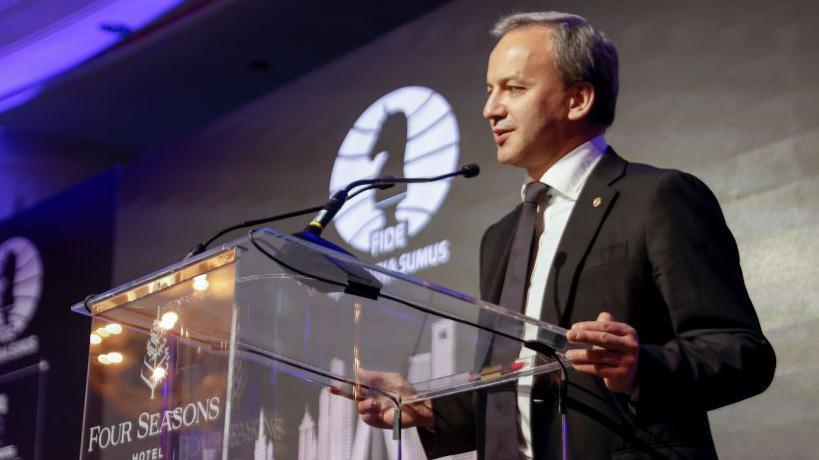
The world of chess was stunned when FIDE president Arkady Dvorkovich announced that he would voluntarily suspend his duties after the European Union placed him on its sanctions list.
At 54, the former Russian deputy prime minister and Kremlin adviser now faces an EU travel ban and asset freeze. The sanctions come after the EU said Dvorkovich publicly supported Russia’s annexation of Crimea and described occupied Ukrainian cities as "new territories" of the Russian Federation.
Dvorkovich said he had decided to “voluntarily suspend the exercise of my powers and duties” but confirmed he had not resigned, calling the sanctions “unlawful and unfair.”
Ukraine hailed the move as an important victory, with its chess federation’s first vice‑president Volodymyr Kovalchuk stating that a man who serves an aggressor state has no place in senior international positions. England’s representative to FIDE, Malcolm Pein, described the sanction as an “earthquake” and a massive diplomatic win for Ukraine, noting it could curtail Russia’s influence in a sport that has been a soft‑power instrument since World War II.
Under Dvorkovich’s leadership, Russian national teams were banned from international chess competitions following the 2022 invasion of Ukraine. Critics claim Russian influence intensified within FIDE, with Moscow attempting a slow takeover and altering internal rules. In September 2024, a FIDE general‑assembly vote maintained sanctions against Russia and Belarus, refusing to reinstate Russian participation.
Dvorkovich’s position is now uncertain; he had planned to run for re‑election in September before the sanctions threatened his future. As chess continues to boom worldwide, the potential loss of a key figure could herald a new era for international chess leadership.