In brief
The European Court of Justice has ruled that Hungary's anti-LGBTQ legislation, enacted by Viktor Orbán's government, infringes key EU principles of equality and minority rights. The court highlighted that these laws promote discrimination and stigmatize LGBTQ individuals while also breaching fundamental values outlined in the EU Treaty. The ruling comes shortly after recent election results in Hungary, indicating potential changes in the country's political landscape.
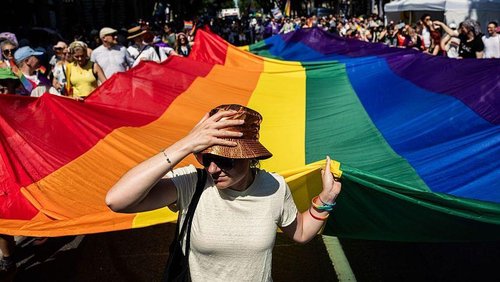
The European Union's top court has ruled that Hungarian anti-LGBTQ laws violate EU rules and infringe its values of equality and minority rights. The laws were brought in by Viktor Orbán's government in 2021 and banned so-called promotion of homosexuality or gender change to under-18s, under the guise of child protection laws.The European Court of Justice ruled that the Orbán reforms breached EU rules on several levels, particularly breaking the founding values of Article 2 of the EU Treaty—an unprecedented finding.This ruling comes just nine days after Hungarians voted to end Orbán's 16-year era of continuous rule. The ECJ indicated that the Hungarian law interfered with rights such as a ban on discrimination based on sex and sexual orientation, alongside respect for private and family life and freedom of expression and information. Furthermore, it found that the law stigmatised and marginalised transgender individuals and non-heterosexuals, equating them with individuals convicted of paedophilia.The Hungarian law was deemed contrary to the very identity of the Union as a legal order that promotes pluralism. Legal experts hailed this decision as historic, stating that the rights of a minority cannot be negotiated away, and emphasizing the need to recognize the natural spectrum of human relationships.Orbán's Fidesz party had leveraged a supermajority to push these regulations through Parliament, including a recent amendment banning public events that relate to LGBTQ communities, such as the Budapest Pride march.The European Commission has announced it will address the anti-LGBTQ laws with Hungary's new government, with an expectation for compliance with the ruling to resolve the issue. The newly elected leader, Péter Magyar, has hinted at a shift towards a more inclusive governance, promising to prioritize LGBTQ rights and seek restoration of Hungary's relations with the EU, including access to blocked funding.LGBTQ advocacy groups have emphasized the urgency for the new Hungarian government to act swiftly against this discriminatory legislation. They insist that aligning with EU values should be paramount in its agenda.