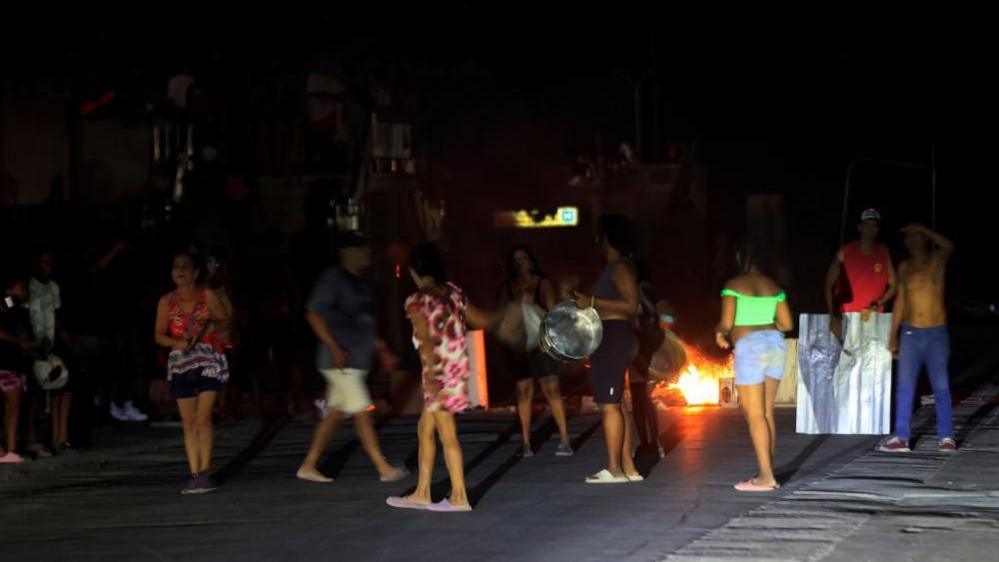
On Tuesday evening residents in many Cuban cities lifted pots and struck metal sheets, voicing their anger over a nationwide power cut that followed two earlier blackouts this year.
Public dissent is usually met with harsh penalties, yet the severity of the outages has prompted spontaneous demonstrations in the hardest‑hit areas.
U.S. sanctions and an effective blockade of oil shipments have left even those with generators unable to obtain fuel, turning the blackouts into deadly shortages of basic power.
Cuban officials said most of the country regained electricity, but places such as Santiago de Cuba remained in darkness, prompting locals to shout for light to be restored.
President Diaz‑Canel admitted that widespread dissatisfaction exists, asking citizens to direct their anger at the U.S. and to avoid blaming him personally.
The U.N. ambassador Michael Waltz criticized Cuba, asking the regime to return power to its people, claiming that there always seemed to be enough electricity for the dictatorship.
Foreign Minister Bruno Rodriguez accused the U.S. of multilateral non‑conventional warfare, describing the situation as ever more cruel over the last months.
Despite the heated public statements, the two governments have held private talks, though President Diaz‑Canel said the talks show no progress, yet welcomed dialogue based on mutual respect and non‑interference in Cuba’s internal affairs.
The blackouts – often exceeding twenty hours – now come on top of shortages of food, medicine and transport, painting a grim picture of everyday life for Cubans grappling in a state of persistent crises.