
In brief
"After witnessing the aftermath of Bashar al-Assad's regime, Syrian refugee Abdullah Al Nofal reveals the traumatic details of his 2013 detention, providing insight into the brutality faced by thousands in Syria’s prisons. With newfound freedom, both Abdullah and his wife, Douna, aim to share these experiences with the world."
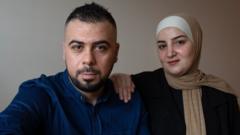
As the world witnesses the aftermath of the Syrian civil war, Douna Haj Ahmed, a Syrian refugee residing in London, faced a haunting revelation about her husband's past. It was December when she saw news footage of prisoners escaping the infamous Al-Khatib prison, often referred to as "Hell on Earth." Sitting beside her, Abdullah Al Nofal, her husband of eight years, broke down, revealing, “This is where I was arrested, this is the place.” Until that moment, Douna had a general understanding of the trauma Abdullah endured during his detention, but now he began to share the depth of his experiences. "Abdullah does not like to share things emotionally. He likes to look like a strong guy all the time," she shared. However, witnessing her husband's emotional vulnerability marked a pivotal moment in their relationship. "I felt he experienced closure. Now we want people to hear what Syrians went through," she emphasized.Abdullah's tribulations began in July 2013 while working as a storekeeper with the International Committee of the Red Cross in Damascus. At a military checkpoint, he was randomly selected, handcuffed, and taken away. Although he had previously participated in protests against Assad's regime, he distanced himself from violence. He recounted his harrowing first three days in solitary confinement, enveloped in darkness and silence, which he claimed felt intolerably lonely. Soon after, he was transferred to Al-Khatib, where he joined over 130 other inmates facing unspeakable cruelty. According to the Syrian Observatory for Human Rights, nearly 60,000 people suffered torture under the Assad regime's grim prisons. In a significant legal development two years prior, a German trial convicted a Syrian colonel linked to the torture of thousands in Al-Khatib. In chilling testimonies, survivors recounted egregious human rights violations involving torture, rape, and murder. During his month-long detention, Abdullah often heard the agonizing screams of tortured inmates and witnessed the pervasive suffering and disease that led about 20 of his cellmates to perish. They were often left with horrific injuries sustained during brutal interrogations. "If you are not tortured yourself, every minute they will take someone to the investigation," he stated, recalling the scene of bloodied inmates returning from torture.Under immense pressure to acknowledge unfounded accusations of transporting weapons, Abdullah resorted to fabricating tales to escape further brutality. He recognized himself as fortunate to have been released after one month and subsequently emigrated to Europe, where he pursued academic opportunities in Geneva and the US.Now settled in London, the couple finds strength in sharing their story. Abdullah mentions, "We finally finished with the regime. We can say we are really free right now." The couple recognizes the importance of amplifying the voices of those who have suffered, with Douna reminding, "We are privileged that we are able to tell our stories. Lots of people died without being heard." As they continue to confront the past, Abdullah and Douna endeavor to shed light on the ongoing struggles faced by countless Syrian families, making sure that their experiences do not fade into silence.


