In brief
Zhu Rongji, premier from 1998‑2003 and key architect of China’s economic reforms, died at 97 and was cremated in a low‑key ceremony attended by top leaders including President Xi Jinping. While the state commemorated the former premier, it also muted online discussions about his era, removing posts that reminisced about a more open past. The funeral highlights the delicate balance between honoring reformists and suppressing nostalgia that could challenge Xi’s narrative. The condolence shows the widening gap between past liberal reforms and the current central‑controlled, technology‑driven agenda. This mourning marks an end to the rapid growth era and a shift toward stricter political control.
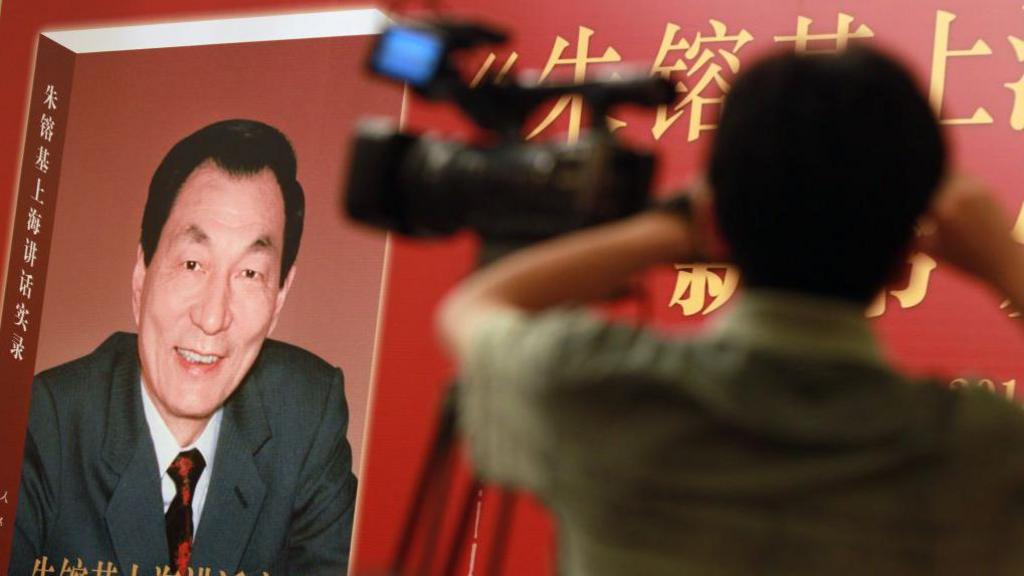
Flags in Beijing’s government buildings were lowered to half‑mast as the nation quietly paid its respects to Zhu Rongji, the former premier whose reign of sweeping economic reforms in the late 1990s and early 2000s set the country on a path toward openness.
The 97‑year‑old, who had earlier survived a purge under Mao’s system, died last week and was cremated in a modest ceremony in the Babaoshan Revolutionary Cemetery, attended by President Xi Jinping, Premier Li Qiang and former Party chief Hu Jintao.
The chill of censorship
While state media praised Zhu as an “outstanding member of the Chinese Communist Party” and a “time‑tested and loyal Communist fighter”, the Chinese government pulled online commentary that evoked the “properly poor” era of reform. An essay by economist Zhao Jian, which reflected on the clear future that seemed visible in the past, was removed from WeChat the day after it appeared.
“There were no smartphones then, no short‑form videos and no screens filled by the purveyors of anxiety. The sky was blue, life moved slowly and people could say what they really thought.”
Such nostalgia has historically sparked protests after the deaths of leaders like Zhou Enlai and Hu Yaobang, so the party is wary of any public mourning that might spark criticism of the current regime.
Xi’s narrative
In a recent speech commemorating Jiang Zemin, Xi urged the Party to carry forward Jiang’s legacy, framing the current leadership as the continuation of the past era’s vision. He warned of “potential dangers” and called for vigilance, contrasting sharply with the era of private entrepreneurship that Zhu championed.
Professor Kerry Brown of King’s College London notes that Xi’s narrative seeks to lock in a unified historical story, leaving little room for “what if” scenarios that could undermine the narrative of continuous progress.
As China faces slowing growth, falling house prices, high youth unemployment and a shrinking workforce, the mourning of the past reflects a broader longing for the certainty that once drove people’s hopes.