Austria Enforces Islamic Headscarf Ban Amid Rising Tensions
As the new school year begins in Austria, a law banning headscarves in schools for girls under 14 has gone into force. The statute specifically bars "traditional Muslim" head coverings—hijabs, burkas and similar garments—in both public and private schools across the country.
Minister Claudia Bauer, head of Austria’s integration ministry and a member of the conservative People's Party (ÖVP), has described the headscarf as "a sign of oppression and a means of controlling girls from the earliest childhood", framing the ban as a protective measure for young girls.
Opponents of the law argue that it fuels anti‑Muslim sentiment and could violate the country’s constitutional guarantee of religious neutrality. The ban was set by the coalition of the ÖVP, the Social Democrats (SPÖ) and the liberal Neos, who stress that it reflects a clear commitment to gender equality.
Carla Amina Baghajati, spokesperson for the official Islamic Community in Austria (IGGÖ), has stated the organization "firmly opposes the ban". "We believe it unjustifiably restricts the fundamental right to freedom of religion and disproportionately affects Muslim girls," she told reporters. Baghajati added that the IGGÖ plans to support legal challenges before the Constitutional Court.
The law builds on a 2020 Constitutional Court ruling that struck down a previous blanket ban on headscarves in primary schools, citing Austria’s principle of religious neutrality. Under the new legislation, teachers are required to hold discussions with students and their guardians if a headscarf is seen. Persistent breaches may trigger involvement of child services and, ultimately, fines of up to €800 (≈£685) for guardians.
Teachers themselves have expressed concern about enforcing the ban. Green Party member Sigi Maurer accused Education Minister Christoph Wiederkehr of placing teachers under additional strain, suggesting that they are being made de facto police. The far‑right Freedom Party (FPÖ) has called for an even stricter measure, demanding a comprehensive ban on headscarves and face coverings for all students and teachers alike.
The policy mirrors France’s long history of restricting visible religious symbols in schools, though France applies a general ban on all conspicuous religious symbols, whereas Austria’s ban specifically targets Muslim head coverings. Like several other European nations—France, Belgium and Denmark—Austria also bans full‑face veils in public spaces.
The IGGÖ warns of a worrying trend in Europe, where complex social challenges are reduced to symbolic actions that disproportionately affect minority groups, asserting that such approaches rarely solve underlying issues.
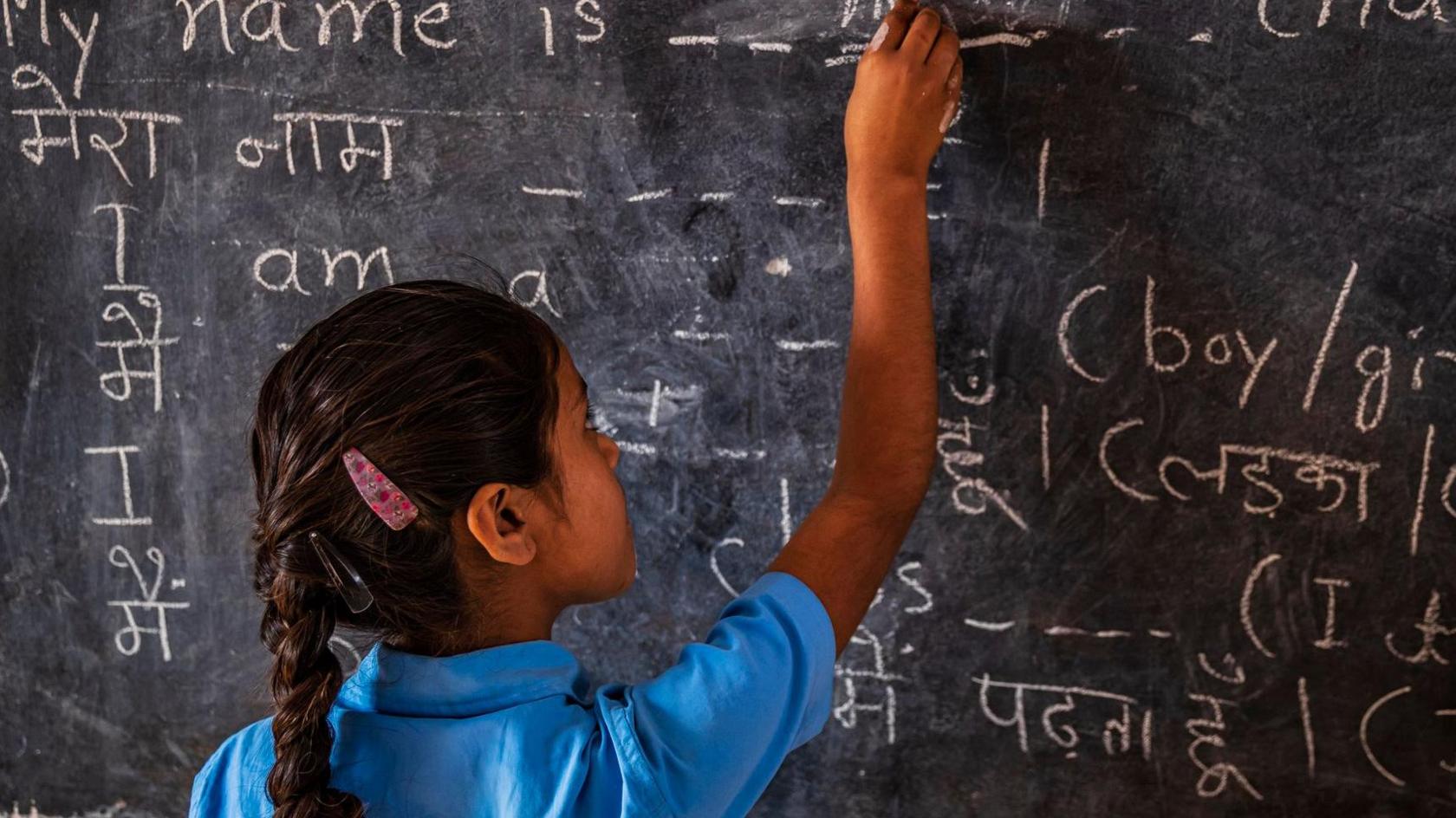
Image: A girl wearing a blue headscarf sits in a classroom, her back to the camera. Source: Getty Images