Stuck between superpowers: How Australia navigates the China‑US rivalry

Snipers shatter the silence of the Australian bush. Then the missiles hit, the smoke rising in the distance. The buzz of drones starts up, soon to be drowned out by helicopters flying overhead.
Every piece of hardware is being deployed, no expense spared. But this is no war zone – the last time Townsville saw conflict was during World War Two. This is a show of military might.
"We live in a volatile world," says Australian Army Brigadier Ben McLennan.
"Training an army to be prepared to fight a war that is potentially more likely than it has been previously, is very important."
War is no longer an abstract concept for Australians who often feel removed from the problems facing other parts of the world. Thousands of miles from active conflict, the country, like everywhere else, is facing the knock‑on effects of Iran and Ukraine such as higher fuel prices and rising inflation.
With China’s military capabilities also on the rise and its increasing influence in the Pacific, there’s also more concern about the threat it represents. Australia has responded by deepening its relationship with the US, its security ally and China’s rival superpower.
But that also puts Australia in a tricky position – for China’s rise has also given Australia its biggest trading partner.
Australia is rehearsing for a war – the worst type of war – a World War Two‑like war, a World War One‑type war, a total war," says Brigadier McLennan, preferring to remain vague when asked who the enemy is.
A paradox that most people are well aware of – which is probably why we are reporting on what Australia is doing to protect itself but nobody is willing to say whom they’re preparing to fight.
Binding tighter to the US
The war scenario playing out before us is part of a major joint exercise known as Southern Jackaroo – a training programme involving the Australian, American and Japanese armed forces aimed at strengthening defence cooperation across the Indo‑Pacific.
“We like to call ourselves America’s 911 response force,” US Marine Kevin Hicks says.
In 2012, just 200 US Marines were deployed to Australia for an annual six‑month deployment. Today, that figure has risen to around 2,500.
A quick read of Australia’s 2026 National Defence Strategy gives you an easy answer as to why these numbers are growing. “Intense competition between major powers – principally the United States and China – will be an enduring feature of our strategic environment,” it says. “China continues to undertake the largest military build‑up in the world today, without the transparency or strategic reassurance the region expects.”
The military tie‑ups aren’t just seen in terms of troops but in bases too – most obviously in the north of the country such as RAAF Tindal air base in the Northern Territory which has been upgraded to support long‑range American B52 bombers.
The security partnership between the US, the UK and Australia – Aukus – arming Australia with nuclear submarines is arguably the biggest example of deepening ties.
The Australian approach differs from that of its fellow middle powers. While Canada’s Prime Minister Mark Carney has talked about middle powers reorganising their priorities in light of an increasingly unreliable US, Australia seems to be intent on tying itself ever closer.
The ‘frenemy’
While Australia’s alliance with the US is changing, so too is its relationship with China. Armed forces might be prepping for a potential military conflict but the fact remains China is Australia’s most important economic partner.
Australia opened up its economy and encouraged business and trade; Chinese President Xi Jinping was invited to address parliament. And it culminated in the signing of a free trade agreement in 2015.
The golden era didn’t last long. When Australia suggested an investigation into the origins of Covid in 2020, China objected to this line of questioning and retaliated with tariffs. In 2021, Australia became the first nation to perform a U‑turn on China’s Belt and Road Initiative – its massive global infrastructure plan – when they cancelled the state of Victoria’s agreement with the Chinese government three years after signing up.
A number of Australians have also been detained in China, including journalist Cheng Lei, who was released in 2023 after more than three years.
Relations have improved in recent years under the Labor government of Anthony Albanese, but it’s not without challenges. In June this year for example, China slapped 55% tariffs on beef to protect its own domestic market – despite the free trade agreement.
Rise and fall of superpowers
Earlier this month, former Prime Minister Kevin Rudd – a fluent Mandarin speaker – gave an address in which he talked of “radical changes” now reshaping Australia’s national security, including “the rise and rise of China at a time when America continues to debate what sort of global power it wants to be”.
Dr Marina Yue Zhang, an Associate Professor at the University of Technology Sydney agrees Australia’s relationship with its closest ally is changing. “The US is really doing something dramatic and more and more people in Australia – and I think globally – have realised ‘is this the big brother we can all trust and put all our faith in?’,” she says.
Balancing act
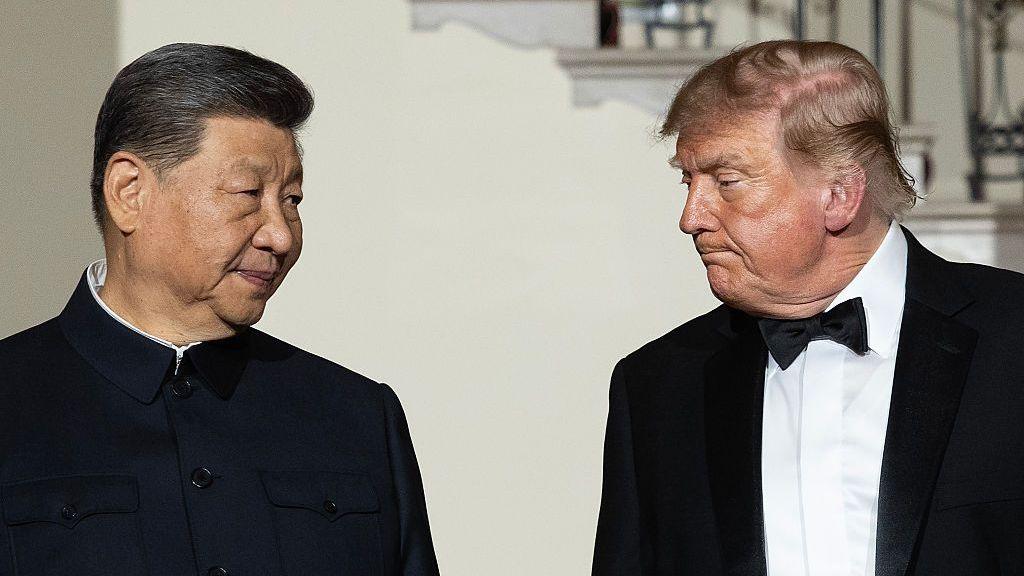
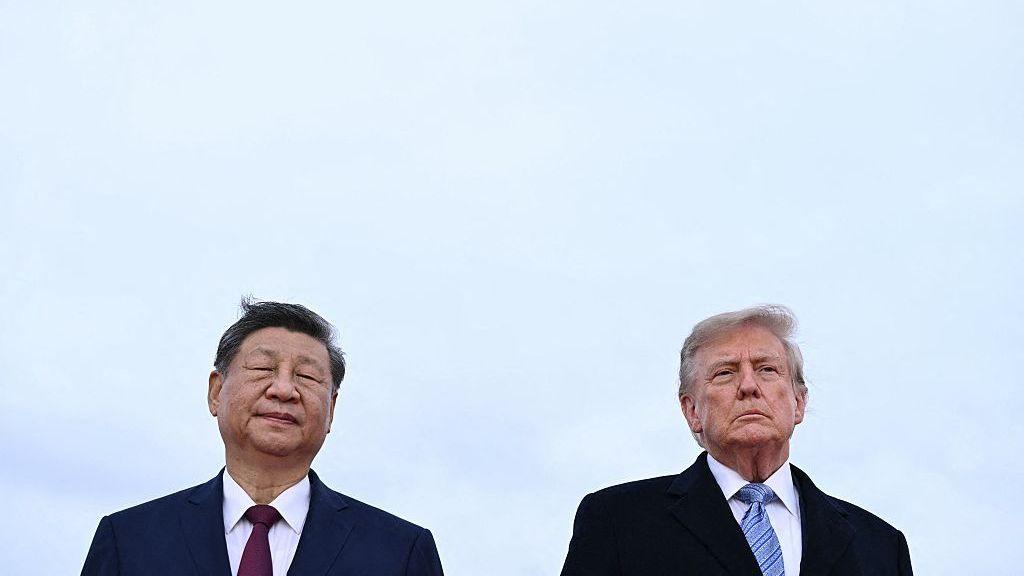
Old rivalries live on. With Australia caught between two superpowers, every exchange between their leaders carries weight. And in Beijing earlier this year, when Xi met Trump, the Chinese president invoked the idea of the Thucydides Trap, the theory that conflict can become almost inevitable when a rising power challenges an established one.
In that competition, Australia is inevitably affected. The US is a security ally that while more unreliable than in the past is still its mainstay. But economically so too is China. It’s not an either‑or relationship, it’s a balancing act.
There’s no way Australia will choose one side and dump the other – it’s not in their interests. It’s getting harder and harder to maintain, but Australia has to do it.