In brief
Tessa Moura Lacerda, a philosophy professor, recounts her emotional journey to obtain her father's death certificate, which validates his death as a victim of state violence during Brazil's military dictatorship. Now, amidst rising conversations about the era, she emphasizes the importance of official recognition for victims' families and the need to confront this traumatic history to prevent its recurrence.
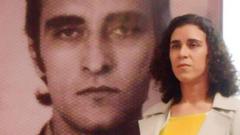
In a poignant struggle for acknowledgment, philosophy professor Tessa Moura Lacerda recalls a rainy August morning in 2019 when she and her mother finally held the corrected death certificate of her father, Gildo Macedo Lacerda. This document, declaring his cause of death as “unnatural, violent death caused by the State to a missing person [...] in the dictatorial regime established in 1964,” symbolized the culmination of over two decades of effort to formally recognize his fate. Gildo, only 24 years old, perished under torture in 1973 during the height of Brazil’s military dictatorship, a dark period that claimed at least 434 lives and left thousands tortured or missing, as revealed by a national truth commission.On October 22, 1973, Tessa's parents, Gildo and Mariluce, were apprehended in Salvador, Bahia, for their involvement in a left-wing group advocating for democracy. While Mariluce endured questioning before her release, Gildo’s fate remained dire as he vanished following their arrest. Eyewitness accounts detailed his screams echoing from an interrogation room, but official narratives falsely characterized his death as a street shooting over a political dispute.Years passed, and the original death certificate, issued under a 1995 law that allowed families to seek documentation for missing relatives, arrived with blank fields regarding the cause of death. Furthermore, Gildo’s remains are believed to be among unidentified victims in a mass grave filled with political dissidents.For Tessa, who never met her father, his absence loomed large. Growing up, the untold details haunted her dreams and influenced her parenting. Spurred by mental scars from childhood trauma, she confronted her past and dedicated herself to rectifying the legacy of those lost during the dictatorship—not merely for her father but for all victims.In December, Brazil announced its intent to amend death certificates for recognized victims in recognition of the state's culpability, invigorating a national dialogue about the era, especially in light of Walter Salles' film "I'm Still Here." This powerful cinematic work recounts the plight of another family grappling with a similar loss. Many Brazilians who've experienced this harsh history resonate with the film, leading to renewed calls for acknowledgment of past injustices.Although the amended certificates provide a semblance of closure, significant hurdles remain. Legislation shielding past military officials from prosecution limits the pursuit of justice for victims’ families, deepening the collective wound of a nation still grappling with its history. Tessa and others persist in voicing the urgency of remembrance and accountability; for every enduring pain felt, awareness of historical truth remains paramount.As Tessa passionately states, “I will not stop fighting until the end of my days. I will bury my father.” The quest for recognition persists, embodying both personal and national struggles amid Brazil's complex political landscape.