In brief
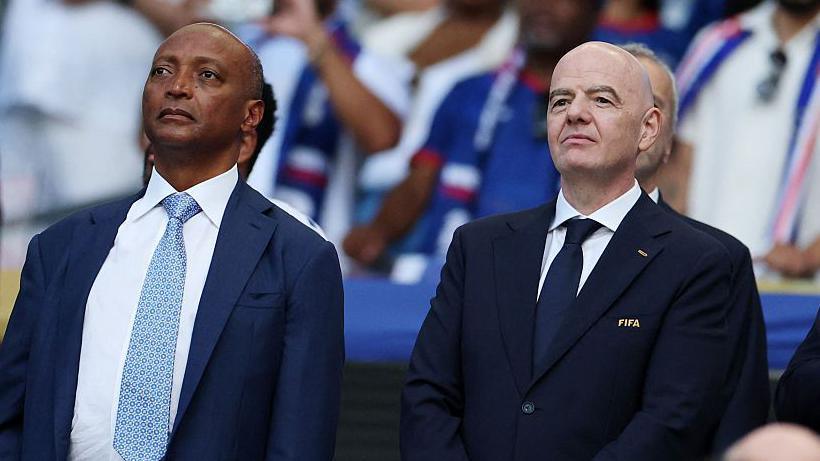
Despite calls for his removal, Infantino remains supported by key African football authorities, including CAF, Egypt, Nigeria, Morocco and the DR Congo. The continent relies heavily on FIFA’s Forward Programme for infrastructure, youth, and women’s football, and sees Infantino as a bridge to that aid. Recent withdrawals of a controversial proposal have prompted mixed reactions – praise from South Africa and Malawi, warnings from Sierra Leone, and silence from Senegal. The mixed messages reflect Africa’s continued dependence on FIFA for resources while demanding stronger governance and autonomy.
Africa keeps backing FIFA President Gianni Infantino
When FIFA scandals and calls for Infantino’s resignation were raised in 2026, African football associations stayed loyal, especially those that depend on FIFA financial flows.
The Confederation of African Football (CAF) has yet to make a formal statement, but its top ambassador Patrice Motsepe publicly praised Infantino after FIFA halted a plan to sell competition stakes to private investors. Six African nations on the FIFA Council – Egypt, Morocco, Niger, Mauritania, and Comoros – backed Infantino persuasively in the months that followed.
The key factor is the Forward Programme, launched in 2016, through which FIFA provides funds for stadiums, youth academies, and women’s football programmes. Much of Africa’s sporting infrastructure owes itself to this grant, and many associations fear losing these lifelines if Fifa’s leadership is altered.
Egypt, home to the CAF headquarters, remains Infantino’s staunch ally. Influential officials, such as Hany Abo Rida, maintain a close partnership with Infantino, valuing the ongoing investment they have secured for football and youth development.
Nigeria’s football federation has also welcomed Infantino’s leadership, citing the chance of receiving up to $8million in Forward benefits. The national NFF has begun a major redevelopment of its Abuja Technical Centre under a current $4.88million project, calling Infantino’s stewardship essential to Indonesia’s ambitions.
The DR Congo federation, led by President Véron Mosengo‑Omba, applauded Infantino’s decision to drop the contested Forward Enterprise proposal, earmarking continued support for FIFA‑backed development work. Nigeria’s federation continues to point to the vital assistance of the Forward Programme in bridging infrastructure gaps.
South Africa’s Minister of Sports, Gayton McKenzie, warned against “public lynching” of Infantino, citing his positive contributions to the continent. Malawi and Uganda’s football chiefs argued that FIFA’s portfolio has improved conditions on and off the pitch, given their limited governmental budgets.
Not all African federations agree. Sierra Leone’s former FA president Isha Johansen cautioned that a commercialised approach may compromise the continent’s long‑term safety and fairness. Gambia’s president Lamin Bajo highlighted the need for caution and emphasized that any decision must exceed short‑term benefits.
Senegal’s football federation has yet to issue any statement, as they weigh opinions and strategies ahead of future presidential elections. In short, many African federations remain loosely tied to FIFA as a benevolent partner, preferring continuity over uncertainty in leadership.
Reporting by Brown Fortune et al. – Modified for WorldVoice News.