In brief
A shocked 75,000‑year‑old Neanderthal skeleton from Shanidar Cave has a near‑perfect circular hole in its left shoulder blade, the sharpest evidence yet of a lethal struggle inflicted by a wooden spear. The find, dating back to the Middle Pleistocene, challenges the belief that early humans lived peaceful lives. Its assessment, based on the wound’s shape and direction, indicates the spear entered the chest, sliced lung tissue, and exited through the shoulder, causing fatal damage. Other clues—a right hand, ribs and teeth—support the notion of violent or accidental hunting trauma. Scholars debate whether the injury resulted from a targeted attack or a hunting accident, but the evidence strengthens the case for longer‑lasting, interpersonal violence in our ancestral past.
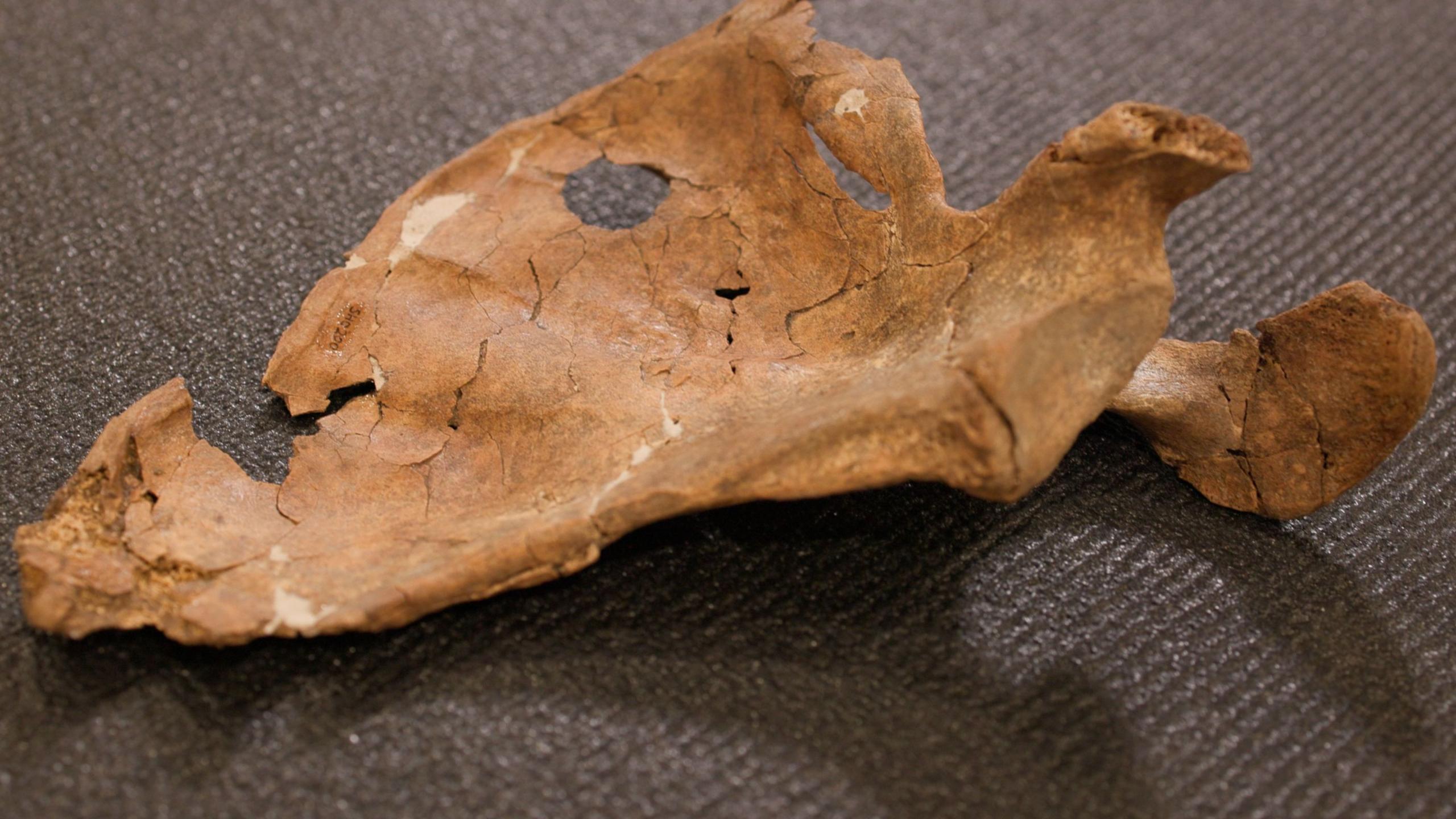
Scientists have uncovered the earliest evidence of a lethal hiding‑strike by a wooden spear in a 75,000‑year‑old Neanderthal skeleton found in Shanidar Cave, northern Iraq. The skeleton, named Shanidar A, shows a perfectly round hole about 15 mm across in the left scapula, a mark that researchers say is impossible to get without a sharp, pointed weapon.
The angle of the wound and the direction of the shaft through the chest suggest that the spear entered the torso, sliced the lung and major blood vessels, and exited through the shoulder blade, killing the individual on the spot. The injury adds to a growing body of discoveries that point to intermittent personal conflict in ancient hunter‑gatherer groups, a pattern that may extend as far back as 430,000 years ago when similar injuries were found in Spanish Neanderthal skulls.
The find was announced by Dr Emma Pomeroy, a Cambridge archaeology researcher, who compared the hole to experimental tests with reconstructed wooden spears. Those tests replicated similar round cavities, reinforcing the idea of deliberate violence. While the exact cause—friendly fire, hunting accident, or gang‑style attack—remains open, experts favour an intentional assault based on the positioning and severity of the wound.
Already, other Shanidar Cave specimens show healed rib fractures that may indicate previous violent encounters. These repeated injuries suggest that interpersonal violence was not an occasional outlier but an enduring feature of Neanderthal societies—challenging the image of a uniformly peaceful hominin world.
The latest research underscores how early human societies may have engaged in lethal conflict long before the advent of agriculture and permanent settlements. Studying these ancient wounds offers a window into the emotional and social lives of Neanderthals and their human cousins, helping us understand the roots of conflict in our own species.
The damaged shoulder blade of Shanidar A, the victim of a lethal spear strike.