
In brief
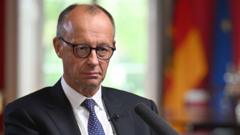
In his first UK broadcast interview, Chancellor Friedrich Merz openly admitted to Europe's insufficient defense funding, citing a need for increased self-sufficiency.
Chancellor Friedrich Merz of Germany has come under scrutiny regarding the country's defense funding, acknowledging that Europe has historically depended too much on the United States for security. Speaking on the BBC's Today Programme, Merz stated, “We know we have to do more on our own and we have been free-riders in the past.” As part of his efforts to bolster defense ties with the UK, Merz participated in signing a landmark friendship treaty aimed at countering irregular migration and fostering youth exchanges.The ongoing conflict in Ukraine has set the tone for Merz's initial weeks in office, alongside US President Donald Trump's threats of imposing hefty import tariffs on EU exports. Merz expressed a collaborative spirit with Trump, saying, “I think President Trump is on the same page; we are trying to bring this war to an end.” Their discussions have revolved around not just the Ukrainian crisis but also trade negotiations.During his pre-election campaigning, Merz had stood firmly with Ukraine, even visiting Kyiv before his victory. A mere four days after taking office in early May, he demonstrated solidarity by traveling to the city alongside UK Prime Minister Sir Keir Starmer and French President Emmanuel Macron. “We are seeing a big threat, and the threat is Russia,” Merz emphasized. Reflecting on the US Vice-President JD Vance's provocative statements at the Munich Security Conference, Merz acknowledged the need for Germany to adapt its defense strategies. “I think in Munich he thought we lost the Americans – we have to look after ourselves,” Merz noted, emphasizing a fundamental shift in Europe's security policy.Merz has paved the way for significant increases in German military spending and is currently working on enhancing trilateral military cooperation with the UK and France, known as the E3 coalition. He maintained, “We are not strong enough; our army is not strong enough,” justifying the increased defense budget.While Merz is establishing closer ties with his British and French counterparts, the treaties they sign reinforce mutual defense commitments, significantly impacting their bilateral relations. Additionally, ongoing collaborations include joint initiatives in defense manufacturing and significant developments in missile technology.However, Merz remains critical of the US's retreat from European affairs under Trump’s administration, stating that the US has been “largely indifferent” to Europe’s fate. With potential trade tariffs looming from the US, Merz expressed concerns, interpreting the situation as detrimental to Germany's export economy.Moreover, under the new treaty, Germany has committed to legislate measures against human smugglers, a pressing issue affecting illegal migration routes. Merz pledged rapid legislative action to tackle these challenges effectively.Plans for enhanced connectivity, including a direct train link between London and Berlin, are also in the pipeline, aiming to foster educational exchanges among youth. Merz hopes this treaty will serve future generations by strengthening ties through direct engagement and collaboration.
