
In brief
On December 26, 2004, a powerful earthquake triggered a tsunami that devastated the Andaman and Nicobar Islands. A survivor shares their experience of witnessing the destruction as they attempted to reach Havelock Island, highlighting the tragic loss of life and the ensuing relief efforts.
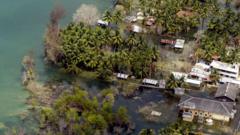
On Boxing Day, 2004, an earthquake rattled the Indian archipelago of Andaman and Nicobar at 06:30 (01:00 GMT) as I boarded a ferry to Havelock Island. The picturesque Radhanagar beach, recently awarded "Asia's Best Beach" by Time magazine, was the destination of my long-awaited visit. I had arrived just in time for the holidays, eager to reunite with my college friend's family in Port Blair.As we set sail from Phoenix Bay jetty, disaster struck. The boat suddenly lurched, and the adjacent jetty crumbled into the sea, along with a watchtower and an electricity pole. The sight was surreal; luckily, the jetty was empty at the time, sparing lives in what would soon become a catastrophic event. At that moment, none of us aboard grasped the magnitude of the quake we had just experienced—the 9.1 magnitude earthquake was the third-largest ever recorded.This massive tremor unleashed a tsunami, claiming an estimated 228,000 lives across dozens of countries while wreaking havoc on Indonesia, Sri Lanka, India, Maldives, and Thailand. With the Andaman and Nicobar Islands situated only about 100 kilometers from its epicenter, it was only a matter of minutes before waves measuring up to 15 meters struck land, causing widespread devastation.While we were on the ferry, information from the crew indicated that places like Sri Lanka and Thailand suffered severe damage, but details pertaining to the islands remained elusive. The archipelago, home to a unique mix of indigenous groups, had its only means of transport via ferries. We later learned that approximately 94% of the jetties had been damaged, rendering our voyage to Havelock impossible.As we turned back to Port Blair, anxiety mounted among the passengers. After several hours of turbulent seas, we reached Chatham harbor—a site transformed by destruction. Buildings had collapsed, upturned boats lay in the streets, and the trails of destruction were evident everywhere we looked. More than a thousand people lost their lives, and thousands more became homeless as a result of the tidal wave that swept through low-lying neighborhoods.During those first days post-tsunami, I encountered heartbreaking stories—a young girl who nearly drowned, a woman who lost her entire life’s possessions, and families torn apart. The humanitarian response from the army, navy, and air force was immediate, but logistical challenges complicated rescue efforts on the scattered islands.The devastation proved extensive, with saltwater contaminating freshwater supplies and rendering land unfit for cultivation. Port Blair struggled with significant aftershocks that continued to create fear of fresh tsunamis, propelling locals toward higher ground.Soon after the disaster, journalists were flown to the flattened Indian air force base in Car Nicobar, where countless families were forced to take refuge in makeshift tents along the roads, the remnants of their homes transformed into rubble. The agony of families losing everything was palpable, with grief-stricken parents reflecting on the loved ones they could not save.In the days that followed, rescue operations recovered dozens of bodies, but many others were swept away by the waves, their fates unknown. The haunting memories of that fateful ferry ride linger, forcing me to contemplate the fragility of life and the fate of those who were not as fortunate as I was on that devastating day.
