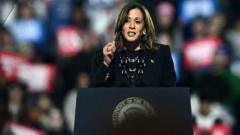
Kamala Harris faced deep political challenges in her recent campaign against Donald Trump, which culminated in a significant loss that will haunt the Democratic Party. Her candidacy, initially positioned as a pivotal moment for a "new generation of leadership," was marred by unfulfilled expectations and strategic miscalculations.
Nearly a month prior, during an appearance on ABC's The View, Harris's response to a question about how she would differ from Biden became a pivotal moment. Her answer, "Not a thing comes to mind," transformed into a Republican weapon, underscoring her failure to distance herself from an unpopular administration. Despite conceding after the election, Harris’s supporters are left grappling with the disappointment and reflecting on potential missteps in her approach.
As the Vice President, Harris struggled with the entrenched unpopularity of President Biden, whose approval ratings consistently lingered in the low 40s. Despite entering the campaign with initial energy and endorsements from influential figures, including Taylor Swift, the overwhelming economic anxieties faced by voters became a persistent hurdle. Many voters expressed concerns over their financial situations, with dramatic shifts in public sentiment regarding immigration policies.
Within the party, questions arose about Harris's loyalty to Biden. Some allies voiced that her adherence to the administration’s policies may have hindered her ability to present a distinct vision for change. As she treaded the line between acknowledging the administration's record while promoting her own ideas, Harris struggled to articulate clear policies and effectively address voter frustrations.
In an effort to rebuild Biden's coalition, Harris aimed to connect with black, Latino, young voters, and college-educated suburban women but fell short. The data revealed troubling declines in support from Latino and young voters while women’s backing did not match Biden’s previous levels. The anticipated momentum from the abortion rights movement after the Supreme Court's decision failed to materialize decisively.
Harris's strategy of framing the election as a referendum on Trump did not yield the desired outcomes. Instead of focusing on her plans for governance, her campaign shifted heavily toward attacking Trump, neglecting to build a compelling case for her own administration. Critics noted that this approach miscalculated voters' familiarity with Trump and their desire for a clearer understanding of Harris's objectives.
In the aftermath of the election, many commentators observed that the Democratic Party's challenges extend beyond a single candidate. Harris's loss reflects broader systemic issues within the party that must be addressed as they prepare for future contests.