
In brief
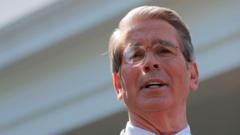
As the Trump administration paused numerous tariffs, Treasury Secretary Scott Bessent took center stage, diverging from his colleagues who maintain a harder stance. This shift highlights power dynamics and influences within trade policy, leaving markets in uncertainty.
In the instant aftermath of President Donald Trump's announcement to halt a range of sweeping "reciprocal" tariffs, a familiar figure emerged as the mouthpiece of this significant policy shift: Treasury Secretary Scott Bessent. Addressing the media with a blend of authority and assurance, the former hedge fund manager, now aged 62, claimed that it required “great courage” to reach this pivotal moment. However, his comments were made in the absence of key figures who traditionally assist in framing Trump's tariff narrative, namely, Commerce Secretary Howard Lutnick and trade advisor Pete Navarro. The scenario, as painted by trade policy veterans, underscores a notable reconfiguration of influence within the White House, as it appears the US has deftly circumvented a potentially damaging trade war, all while maintaining support for Trump’s broader economic agenda. "He’s the good cop," remarked William Alan Reinsch, a former head of the National Foreign Trade Council, referring to Bessent's tone, while positioning Lutnick and Navarro in the “bad cop” role.While publicly, the administration remained tight-lipped about the events leading up to the pause on 9 April, reports from US media suggest that Bessent, buoyed by a flurry of communications with business leaders, played a crucial role in persuading Trump. Key dialogues reportedly took place on Air Force One prior to the announcement, as well as in the Oval Office.Historically cautious about tariffs, Bessent’s reservations and extensive experience in the bond market may have facilitated his elevated level of influence over his counterparts Navarro and Lutnick, who have espoused stricter tariff policies. Mr. Reinsch asserted that Bessent's methodology reflects a shrewd approach to engaging Trump: reframing discussions around market reactions rather than confronting the president directly about his judgments.On that morning of 9 April, Trump conferred with Bessent alongside National Economic Council director Kevin Hassett and Lutnick, a staunch advocate for tougher action against China. However, the notable absence of US Trade Representative Jamieson Greer—who was busy testifying before a House committee—and Navarro, who is usually vocal in media appearances, sparked speculation about a disparity in their influence within the taskforce.Such inconsistencies in public communication have led to confusion and volatility in the markets, as experts noted the lack of coherence among the Trump tariff team. “There’s a sense of whiplash," remarked Mark Sobel, a former Treasury Department veteran.Political consultant Terry Haines proposed that the varied spokespeople serve a tactical purpose of overwhelming audiences with differing viewpoints, albeit at the cost of clarity for the markets. He emphasized the different target audiences each spokesperson addresses, whether it be Bessent with financial analysts or Navarro appealing to a broader political base.Looking ahead, many analysts believe that Bessent is poised to step into a more central role in the public narrative surrounding economic policy. Lutnick is expected to lead negotiations while Navarro, Hassett, and Greer are relegated to supportive roles, a strategy that may bring more consistency, thus enhancing market stability.Overall, as discussions continue about tariffs and their implications, a more organized strategy within the Trump administration could ultimately align with the desires of investors looking for predictability. The evolving landscape suggests a new phase in the administration’s approach to trade policy underpinned by Bessent's quiet yet significant influence.
