
In brief
As the grip of Bashar al-Assad's regime weakens, families in Syria are uncovering graves filled with the remains of loved ones who disappeared under the regime's oppressive rule. Khaled al Hamad's search for his brothers, alongside others, highlights the urgent need for closure and justice amidst a history marred by violence and cruelty.
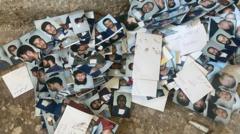
Khaled al Hamad was digging up human remains in a cemetery located in Adra, a neighborhood that witnessed strict control by President Bashar al-Assad's military for years. Following the recent escape of Assad's forces, a concrete slab was moved, revealing a shallow grave containing at least half a dozen body bags, each labeled with names and prison numbers. Khaled, who was frantically pulling out the bags when reporters arrived, has opened three of them, finding human skulls and bones inside. The identities of the remains hint at two female prisoners and one male, yet it remains uncertain how they met their demise or if these deaths indicate criminal abuse by the regime. Khaled's personal desperation drives these discoveries as he searches for his two brothers, Jihad and Hussein, who were taken by Assad's air force intelligence a decade ago.In a shocking revelation, Khaled recalled stories of individuals taken to a site known as "the driving school" where he believes his brothers could have met their end. Human Rights Watch has acknowledged ongoing investigations into the grim discoveries of prisoners' remains, echoing the sentiments of many families across Syria who are devoid of closure after decades of despair. Once a region of tight security under Assad, Adra now presents a realm of hope for families like Khaled's. The psychological burden of living amidst a culture of fear that prevented locals from stopping or even looking up has begun to crack. Reports hint at the Mazzeh military airbase, a notorious prison location, where significant torture occurred. A command member from Hayat Tahrir al-Sham (HTS), who have taken control of parts of Syria, shared chilling accounts of torture devices used on prisoners, including electric cables meant to inflict unspeakable pain and force false confessions.Alongside the pain of discovering photographs of missing relatives laid bare on prison floors, one mother, desperate to find her son Mahmoud Saed Hussein after 11 years of searching, was left sobbing—signifying the infinite heartache and loss plaguing countless families. As records and piles of documents provided a heavy reminder of humanity’s capacity for cruelty, the utter disregard for individual stories within this bureaucratic nightmare was evident, reviving calls for thorough investigations.In light of recent developments in Syria, the balance of power among various factions and international entities remains tenuous, with many Syrians proclaiming a desire for self-governance free from external influences. As remnants of Assad's regime are dismantled, the future of the country remains up in the air, with unanswered questions tied to both present and past atrocities. Amidst this chaos, families like Khaled's continue searching, desperately clinging to hope, seeking the truth buried beneath the rubble of Syria's tragic history.

