In brief
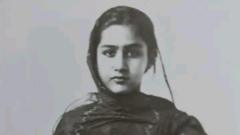
Abida Sultaan, born in 1913 in Bhopal, shattered traditional expectations of women, engaging in tiger hunting, polo, and flying planes. Despite personal struggles, including a challenging marriage and the violent aftermath of India's partition, she became a symbol of women’s empowerment and political activism.
Abida Sultaan was not your typical princess. Born in 1913 into the royal family of Bhopal, she rose above cultural norms, becoming the heir to the throne at just 15. With a short haircut, a penchant for shooting tigers, and a love for polo, she was a pioneering figure in challenging societal expectations placed on women, especially within her community. Abida dispelled the notion of women in purdah—conforming to seclusion and modest dress—by embracing a lifestyle of freedom. Her grandmother, Sultan Jehan, guided her upbringing with strict discipline while also encouraging her independence. Abida's childhood was marked by rigorous academic and physical routines. Waking at four every morning to read the Quran proved to be just the beginning of her extraordinary life, which included sports, music, and deep, reflective chores. She stated, “We girls were not allowed to feel any inferiority on account of our sex. Everything was equal.” Her defiance came into full force at age 13 when she rebelled against entering purdah, leading to a lifelong commitment to her freedom. At age 12, Abida was married to her childhood friend, Sarwar Ali Khan of Kurwai. The marriage proved to be a brief affair, filled with comedic misunderstandings and ultimate heartache. In her memoir, Abida recounted her wedding day where, while engaging in a pillow fight, she was suddenly thrust into the role of bride. "No-one had prepared or instructed me," she wrote, humorously illustrating her shock at the proceedings. The marriage quickly unravelled due to young age and a lack of sexual knowledge, which Abida openly explored in her writings, steering clear of stereotypes about Muslim women's silence on intimate issues. After separating from her husband, Abida became embroiled in an arduous custody battle for their son. In an audacious move, she confronted her husband with a revolver to secure her son’s custody, proving herself as a formidable force. As the heir to the Bhopal throne, Abida managed her father's cabinet from 1935 until 1949 when Bhopal became part of India. Engaging with key figures like Mahatma Gandhi and Jawaharlal Nehru during pivotal round-table conferences, she witnessed the tumultuous effects of the country’s partition in 1947. The violent rift between Hindus and Muslims in the wake of partition deeply affected Abida, prompting her move to Pakistan in 1950. There, she became an advocate for democracy and women's rights, continuing her legacy until her death in 2002. Although recognized less now, with diminishing discussions on her life, her nickname ‘bia huzoor’ remains a testament to her impact in Bhopal. Journalist Shams Ur Rehman Alavi notes that while religious politics have overshadowed her legacy, Abida's story is far from forgotten.