
In brief
A family in Tyre grapples with the overwhelming destruction of their home following a recent airstrike on the city. Amidst a fragile ceasefire between Israel and Hezbollah, they discover their lives have been upended, a vivid reflection of the conflict's devastating toll.
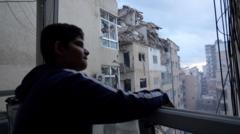
Amidst the rubble and debris, Mohamad Marouf and his family returned to their home in Tyre, southern Lebanon, hours after a ceasefire was declared between Israel and Hezbollah. The area was battered by recent Israeli airstrikes, and as they surveyed their surroundings, the enormity of the destruction was painfully clear. “I’m so sad, it was a nice and decent house,” lamented Mr. Marouf, pointing to the damage that had turned his once cherished home into a shell of its former self.The smoke was still thick in the air as the family navigated the shattered remains of their building, greeted by the ominous silence in what was once a lively neighborhood. With no electricity, they clambered up the broken stairs to their unit, relying on the light from their phones. Upon entering, despair washed over them. Panels had crashed down from the ceiling, windows lay shattered, and the kitchen was strewn with broken dishes, remnants of a life now irrevocably altered.The devastating impact of a nearby attack not only erased their home but left them vulnerable and uncertain. “I don’t know what to do,” Mr. Marouf reflected, revealing the weight of his new reality as his family sought refuge with relatives, overwhelmed by unanswered questions about when or if they could return.Meanwhile, across Tyre, a palpable sense of triumph in Hezbollah circles contradicted the harsh reality faced by many residents. Colorful banners deemed "Made in USA," adorned with the group’s insignia, showcased a narrative of resistance amid destruction. Cars filled with displaced families streamed back into the city, many bearing Hezbollah flags, their movements rife with mixed emotions of loss and defiance.The ceasefire, while allowing for a brief halt in violence, comes against a backdrop of significant casualties, with nearly 4,000 lives lost and 16,000 injured. It was a stark reminder of the human toll and suffering borne by the Lebanese people.The brutal conflict, ignited by Hezbollah's actions in solidarity with Palestinians, escalated dramatically since October 2023 following intense ground invasions and aerial bombardments focused primarily in southern Lebanon, where Hezbollah holds sway. Approximately 1 million individuals were displaced during this period, grappling with the uncertainty of their futures.With a 60-day ceasefire now in effect, both Hezbollah and Israel are expected to retreat from the southern region. As part of an emergency response, the Lebanese military plans to deploy an additional 5,000 soldiers to restore order.In a sign of Hezbollah's assertion of control, representatives led tours around Tyre to showcase the devastation caused by air strikes, further cultivating a narrative of resilience. "All this destruction means nothing as long as we maintain our dignity," asserted Hussein Jashi, a Hezbollah MP, amid the ruins.Local business owners voiced their determination to rebuild. Deed Badawi, who steps forward to reclaim his restaurant’s legacy shattered by the war, was adamant: “We will create something even more beautiful than before.”As emotions ran high among residents, Yaser, a shopkeeper, resumed operations from his newly cleaned-up space, mourning lost friends while expressing hope for the future despite the overwhelming damage surrounding him.The road to recovery looms arduous and uncertain, with financial implications left hanging in the air. Mr. Marouf clings to the belief that assistance will come, as despair is juxtaposed with the flickering hope for healing within the community. "May God protect us all," he concluded, a prayer hanging in the balance of an ever-complicated situation.
