In brief
Recent studies reveal that the Panama Canal's expansion has allowed fish species from the Atlantic and Pacific Oceans to invade the ecosystem, displacing native species and raising concerns about the impact of potential invaders like the lionfish.
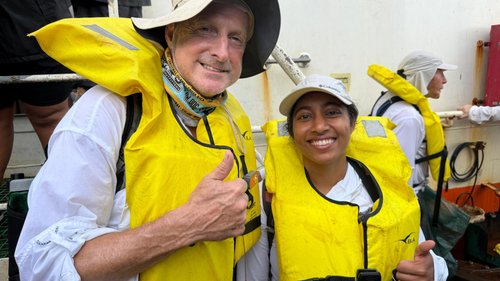
As night descended over Lake Gatún in Panama, scientists from the Smithsonian Tropical Research Institute embarked on a mission to study the evolving marine life in the Panama Canal. What began as a vital link for global trade has transformed into a conduit for ecological exchanges between two oceans. Once separated for millions of years, the Atlantic and Pacific are now witnessing a surge of new fish species due to the canal's expansion in 2016 to accommodate larger cargo vessels.Previously, the canal and its freshwater reservoir mainly hosted native species like peacock bass and tilapia. However, the recent influx of marine fish species such as snooks, jacks, and snappers has led to a dramatic shift in the local ecosystem. Fishermen who rely on traditional catches are reporting significant declines, raising concerns about the long-term sustainability of local fisheries.Ecologists warn that invasive species could further exacerbate this situation. Among the most alarming potential invaders is the lionfish, a venomous predator known for decimating local fish populations in regions where it has established a foothold, such as the Gulf of Mexico and the Caribbean. If lionfish manage to navigate through the canal, they could pose a severe threat to the vulnerable ecosystems of the eastern Pacific.As researchers continue their studies in the canal, the implications of these changes are becoming clear: the expansion that facilitated global trade may also usher in a new era of ecological challenges in one of the world’s most significant waterways.